Road rage accident settlement amounts in Ontario run from about $103,000 to $220,000 in recent reported cases, and judges can add punitive damages when a driver acts on purpose. Your own number depends on your injuries, your proof, and who is to blame. Most victims only learn which missing detail weakens a payout the most after the claim has already started.
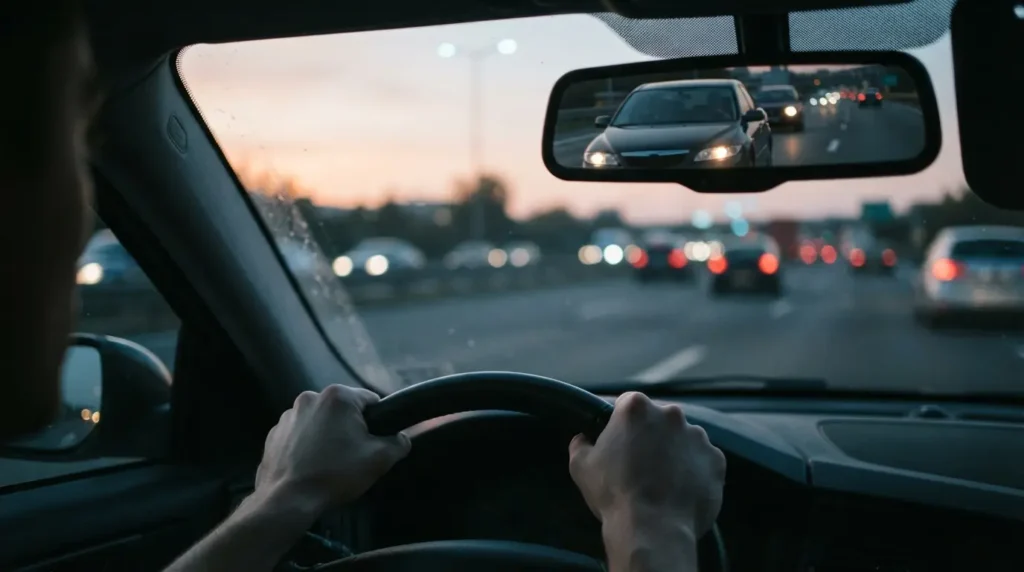
One moment you are driving home on Highway 401. The next, a stranger is out of his car, pounding on your window. Road rage can leave you with a broken wrist, a concussion, or a fear of driving that will not fade. It also leaves bills, missed shifts, and a hard question: who pays for this?
The problem is real. Ontario recorded 115 deaths from speeding and aggressive driving in 2022. Behind each number is a family dealing with the fallout, from Toronto and North York to Brampton, Hamilton, Kingston, Ottawa, and Eastern Ontario.
Many victims ask, can you sue for road rage in Ontario? Yes, you can. Road rage lawsuit compensation in Ontario does not depend on a criminal conviction, but it does depend on evidence, and the clock starts the day you are hurt. Ontario’s basic limitation period is two years.
Cost stops many people from asking for help. This guide comes from Maana Law, a Mississauga personal injury firm, and it uses verified court figures instead of guesses. It also explains how most injury lawyers get paid: on contingency, so you pay nothing up front.
Here is what this guide covers:
- What counts as road rage, and the criminal charges that can follow
- Whether you can sue, and who pays when two drivers share blame
- Real settlement and award figures, including the 2026 deductible and threshold
- How punitive damages, accident benefits, and insurance denials change your payout
- What to do in the first hours to protect your claim
What Counts as Road Rage Under Ontario Law?
Road rage is aggressive or violent behaviour by a driver, such as threats, ramming, or a physical attack, fuelled by anger. Ontario has no single road rage offence. Police and prosecutors use careless driving, dangerous driving, and assault laws instead.
Aggressive driving is the milder end of the scale. It includes tailgating, cutting off other drivers, and weaving through traffic. Road rage starts when the driver aims that anger at a specific person. Common examples include:
- Brake-checking or ramming your vehicle on purpose
- Blocking your car so you cannot leave
- Getting out to shout threats or hit your car
- Punching, kicking, or using an object as a weapon
It helps to separate road rage criminal charges vs a civil lawsuit in Ontario. Criminal charges punish the driver. A civil lawsuit pays you. They are two different tracks, and one does not need the other.
| Legal label | Law | Maximum penalty |
|---|---|---|
| Careless driving | Highway Traffic Act, s.130 | Fine of $400 to $2,000, up to 6 months in jail, up to 2 years licence suspension, 6 demerit points |
| Careless driving causing bodily harm or death | Highway Traffic Act, s.130(3) | Fine of $2,000 to $50,000, up to 2 years in jail, up to 5 years licence suspension |
| Dangerous driving | Criminal Code, s.320.13 | Up to 10 years in jail; up to 14 years if bodily harm; up to life if death |
Toronto defence lawyers list these penalties in detail. A driver in Brampton who brake-checks you is driving aggressively. A driver who then blocks your car and smashes your window faces assault charges and a civil claim.
Can You Sue for Road Rage in Ontario?
Yes. You can sue a driver who injures you through road rage, even if police never lay a criminal charge. Ontario courts hear these cases as negligence claims, assault and battery claims, or both. A road rage assault civil claim in Ontario is a lawsuit for the intentional hit, threat, or attack.
A negligence claim says the driver failed to drive with reasonable care, and you were hurt in a crash. That is the usual road rage car accident claim in Ontario. An assault and battery claim says the driver meant to hit, threaten, or frighten you. A civil court decides on the balance of probabilities, which is a lower bar than the criminal standard.
More than one person can be liable. The Court of Appeal for Ontario made this clear in road rage liability under Moran v. Fabrizi (2023 ONCA 21). Ottavio Fabrizi ran a red light and hit a minivan, injuring passenger Tate Moran. His insurer settled her claim for $220,000. Fabrizi’s side then argued that Dennis Chu’s road rage caused the crash. The trial judge found Chu 50% responsible and ordered him to cover $110,000. The Court of Appeal upheld that result.
The lesson is simple. The driver who hit you, the driver who set off the chase, or both can owe you money. A lawyer will name every party who played a part.
What Are Typical Road Rage Accident Settlement Amounts in Ontario?
Reported Ontario road rage outcomes run from about $103,000 to $220,000. In Murad v. Paul (2026 ONSC 4902), the court awarded $102,965.80 in total, including $15,000 in punitive damages. In Moran v. Fabrizi, the injured passenger’s claim settled for $220,000, and the road rage driver paid half.
No official average road rage injury settlement in Ontario exists. Most claims settle in private, and the terms stay confidential. Reported cases show only a slice.
A court adds up several pieces to reach a total: general damages for pain, special damages for proven costs, and then interest and legal costs. In Murad, the damages came to $75,390.40. Pre-judgment interest and costs added another $27,575.40 on top.
| Case | What happened | Amount |
|---|---|---|
| Murad v. Paul, 2026 ONSC 4902 | Defendant used a pipe wrench to shatter the driver’s door window and hit the plaintiff | $60,000 general damages, $15,000 punitive damages, $390.40 special damages, $16,862.42 interest, $10,712.98 costs. Total: $102,965.80 |
| Moran v. Fabrizi, 2023 ONCA 21 | Road rage led to a red-light crash that injured a passenger | $220,000 settlement. The road rage driver was ordered to pay 50%, or $110,000 |
The Murad case also shows what can lower a payout. The judge set general damages at the lower end because the medical records were thin. He rejected a lost income claim of $10,000 to $20,000 because the records lacked detail. The plaintiff did one thing right: he photographed the licence plate, and a plate search located the defendant.
Several factors move the final figure up or down:
- The severity of your injury, from soft tissue damage and whiplash to fractures, lacerations, blunt-force trauma, concussion and traumatic brain injury, and spinal injury
- The quality of your medical and employment records
- Your lost income and future care costs
- How fault is split between drivers
- Whether the defendant has insurance or assets to pay a judgment
How Much Is the Average Settlement for Pain and Suffering in Ontario?
Ontario has no fixed average for pain and suffering. Awards rise with injury severity and top out near $470,000 for the most catastrophic injuries. In 2026, a $47,913.01 deductible reduces any award below $159,708.71.
Real awards give a sense of scale. The Murad court awarded $60,000 in general damages for a road rage assault. In Rodrigues v. Purtill, a car accident case, the court awarded $145,000 in non-pecuniary damages. Serious and permanent injuries sit at the top of the range, and soft tissue and chronic pain claims often hinge on one proof problem.
Here is how the pain and suffering deductible and threshold in Ontario for 2026 work under the Insurance Act (Ontario), based on FSRA’s published figures:
- Statutory deductible: $47,913.01 comes off any pain and suffering award below the threshold.
- Threshold: At $159,708.71 or more, the deductible does not apply.
- Example: A $100,000 award becomes $52,086.99 after the deductible.
- Verbal threshold: To sue for pain and suffering, you must show death, permanent serious disfigurement, or permanent serious impairment of an important physical, mental, or psychological function.
These rules apply to claims that arise from the use or operation of a car. A punch or a pipe wrench attack may be treated differently from a collision, so a lawyer will check which rules fit your facts.
What Is the Average Payout for PTSD From a Car Accident?
There is no average PTSD payout in Ontario. Ontario law firms report that mild cases fall in the tens of thousands of dollars, and severe, long-term cases can reach six figures. Each case turns on its own proof.
Courts want expert evidence from a psychologist or psychiatrist to confirm the diagnosis and link it to the incident. They also weigh how long symptoms last and how they affect work, relationships, and daily life. PTSD and driving phobia can follow road rage, and a psychological injury claim must still meet the verbal threshold.
If you were hurt in a road rage incident in Mississauga or anywhere in the GTA, Maana Law offers a free consultation to review your claim.
When Can a Court Award Punitive Damages After Road Rage?
A court can award punitive damages when a driver’s conduct is harsh, vindictive, reprehensible, or malicious. These damages punish the wrongdoer. They are paid on top of compensation.
Punitive damages for road rage in Ontario do not require a criminal conviction. In Murad, the judge awarded $15,000 even though the defendant had no Criminal Code conviction. He called the conduct reprehensible.
Courts also watch these awards closely. In Hockley v. Riley (2007), the trial judge awarded $100,000 in general damages and $20,000 in punitive damages. The Court of Appeal set aside the punitive award because the reasons did not separate compensation from punishment. A punitive award is never automatic.
Here is an example. A driver who chases you for several kilometres, blocks your car, and smashes your window acts with intent, and a court may punish that. A driver who only honks and swerves, then causes a crash, is more likely facing a negligence claim.
Ontario claims use four main types of damages:
- General damages: Pain, suffering, and loss of enjoyment of life
- Special damages: Out-of-pocket costs with receipts, such as medical bills and property repair
- Aggravated damages: Extra compensation for humiliation and emotional harm caused by cruel or malicious conduct
- Punitive damages: A penalty meant to deter the driver and others
SABS Accident Benefits and a Tort Claim: How They Work After Road Rage
Accident benefits come from your own insurer no matter who was at fault. A tort claim is a lawsuit against the person who hurt you. Most road rage victims use both, and aggressive driving injury compensation in Ontario usually comes from each.
| SABS accident benefits | Tort claim | |
|---|---|---|
| Who pays | Your own auto insurer | The driver or their insurer |
| Fault needed | No | Yes |
| Covers | Medical, rehabilitation, attendant care, and optional benefits | Pain and suffering, lost income, future care, punitive damages |
The rules changed on July 1, 2026. Only medical, rehabilitation, and attendant care benefits stay mandatory. Their limits stay at $3,500 under the Minor Injury Guideline, $65,000 for non-catastrophic impairments, and $1 million for catastrophic impairments, and a catastrophic impairment finding changes the whole claim. Income replacement benefits, caregiver benefits, housekeeping, and death and funeral benefits are now optional.
That shift matters. If your policy did not include income replacement benefits, a tort claim for lost income and loss of future income becomes your main path to recovery. Check what your policy actually carries.
Here is an example. A self-employed contractor is hurt in a road rage attack in Hamilton. If the policy has no income replacement benefits, the contractor cannot count on weekly payments, so the lost income claim in the lawsuit carries more weight. Strong pay records then become essential.
Act quickly. Tell your insurer within seven days, and return your application (the OCF-1) within 30 days of receiving the forms. Keep every receipt for out-of-pocket medical expenses.
What If the Driver’s Insurer Denies Coverage or the Driver Is Never Found?
Your claim is not over. A denial or an unknown driver changes who you claim against, not whether you can claim. Two safety nets exist: the defendant’s other insurance and the Motor Vehicle Accident Claims Fund.
Insurers sometimes deny coverage when a driver acted on purpose. That makes insurance coverage for intentional acts in road rage cases in Ontario a real issue. In Pembridge Insurance v. Chu (2019 ONCA 904), the Court of Appeal held that a home insurer had a duty to defend a driver for a road rage incident. His conduct after he left his car broke the link to the vehicle exclusion.
If the driver flees or has no insurance, you may have a hit and run claim through the Motor Vehicle Accident Claims Fund (MVACF). The fund is the last resort for compensation and pays up to $200,000 per accident, including pre-judgment interest, plus legal costs. You must live in Ontario, and you need a police report.
Here is an example. A driver in Ottawa cuts you off, smashes your mirror, and speeds away. The plate is unreadable. A police report, a witness statement, and traffic camera footage can still support a hit and run claim.
The two-year limitation period under the Limitations Act, 2002 still applies. Miss it, and the court can bar your claim. Even a won judgment can be hard to collect if the driver has no assets, which is why early advice matters.
What Should You Do After a Road Rage Incident to Protect Your Claim?
Get to safety, call 911, and collect evidence. Your first hours shape the value of your claim. A plate number, a video, and a medical record can each shape the value of your claim.
- Stay in your car and drive to a public place. Do not argue or follow the other driver.
- Call 911. Ask for a police report. In Mississauga and Brampton, that means Peel Regional Police.
- Photograph the licence plate. In Murad, a photo led to a plate search and a defendant.
- Save dashcam and video evidence. Ask nearby businesses to keep their footage before it is erased.
- Get witness statements. Collect names and phone numbers on the spot.
- See a doctor the same day. Report physical pain and psychological symptoms such as panic or fear of driving.
- Keep records. Save medical notes, pay stubs, and receipts. Thin records lowered the general damages in Murad.
- Stay off social media. Posts can be used against you.
A lawyer then reviews the police report, medical records, and video, and files the claim. A contingency fee arrangement means the fee comes out of the recovery, so you do not pay at the start, though a few costs still surprise people.
Why Maana Law Is the Right Choice for Road Rage Injury Claims
Road rage claims mix assault, negligence, and insurance disputes. A road rage accident lawyer in Ontario needs to know how courts value each part. Maana Law builds these cases on evidence and clear communication.
- Over a decade of personal injury experience. The firm handles car accident, pedestrian, motorcycle, catastrophic, and soft tissue and chronic pain claims across the GTA.
- No win, no fee. You pay nothing unless the firm recovers money for you.
- Led by Aman Kalra. A seasoned personal injury lawyer who works in English and Hindi, supported by a dedicated team.
- Evidence-first case building. The team studies police reports, expert opinions, and witness statements to prove both fault and injury.
- Easy access. Free consultations, virtual meetings, and home or hospital visits fit around your recovery.
- Five-star client feedback. Clients on Google praise the firm’s honest guidance and fast replies.
Maana Law serves clients in Erin Mills, Cooksville, Churchill Meadows, Meadowvale, and City Centre, and explains each step in plain language.
Frequently Asked Questions
How long does a road rage injury claim take?
There is no set timeline. Simple claims can settle in months, and contested claims can take years. In Murad, the incident happened in January 2022, and the judgment came in 2026. Your recovery and your records set the pace.
Can I be blamed if I argued or honked first?
Possibly. Under the rules on contributory negligence, a court can reduce your damages by your share of the fault. The court looks at what each driver actually did, so avoid arguing or fighting back.
Can pedestrians, cyclists, and motorcyclists claim after road rage?
Yes. A pedestrian accident claim or a motorcycle accident claim follows the same tort rules. After July 1, 2026, optional accident benefits apply only to the named insured, spouse, dependants, and listed drivers, so some pedestrians and cyclists keep only the mandatory benefits.
Can my family claim if a road rage incident causes a death?
Yes. Family members can bring a wrongful death claim under the Family Law Act, and what families should know before filing shapes the outcome. For these claims, the 2026 deductible is $23,956.52 and the threshold is $79,853.70.
Do I have to prove the driver meant to hurt me?
Not for a negligence claim, which only needs careless driving that caused your injury. Intent matters for assault and battery and for punitive damages. Video evidence and witness statements are the best proof of intent.
Final Thoughts on Road Rage Settlements in Ontario
The numbers tell a clear story, and three points stand out. Reported road rage accident settlement amounts in Ontario run from about $103,000 to $220,000, with punitive damages such as the $15,000 in Murad v. Paul added for intentional conduct. The 2026 deductible of $47,913.01 and the $159,708.71 threshold can shrink a pain and suffering award, so good medical records protect your payout. And the clock matters, because you have two years to sue, seven days to notify your insurer, and 30 days to return your accident benefits forms.
Road rage is frightening, but the law gives you real tools. You can sue even without a conviction, claim against more than one driver, and look to the MVACF if the other driver disappears. The strongest claims start with the steps you take in the first hours: a police report, clear photos, and full medical records. Those three items answer the questions an insurer or a judge will ask first.
Maana Law, Mississauga, Ontario. Call (437) 979-4878 or visit 90 Matheson Blvd W, Suite 101, Mississauga, ON L5R 3R3 to book your free road rage accident lawyer consultation. You pay nothing unless we recover money for you.
References
- Ontario Ministry of Transportation. Road safety highlights and trends. https://www.ontario.ca/page/road-safety-highlights-and-trends
- Toronto Defence Lawyers. Dangerous driving vs careless driving. https://www.torontodefencelawyers.com/dangerous-driving-vs-careless-driving
- Canadian Underwriter. Insurer wins third party liability claim against road rager (Moran v. Fabrizi, 2023 ONCA 21). https://canadianunderwriter.ca/news/claims/insurer-wins-third-party-liability-claim-against-road-rager/
- Gowling WLG. Can road rage have caused an accident? https://gowlingwlg.com/fr-fr/insights-resources/articles/2023/can-road-rage-have-caused-an-accident
- Law Times. Superior Court awards over $100K against personal injury defendant found via licence plate search (Murad v. Paul, 2026 ONSC 4902). https://www.lawtimesnews.com/practice-areas/personal-injury/superior-court-awards-over-100k-against-personal-injury-defendant-found-via-licence-plate-search/393510