
Product liability settlements in Ontario can range from a few thousand dollars to several million, depending on the defect type, the severity of your injury, and the strength of your evidence. If a product harmed you, the manufacturer, distributor, or retailer may owe you compensation. Working with a personal injury lawyer who handles defective product cases protects your claim from the start. An experienced Product liability lawyer knows how to build a case against well-funded corporate defendants and get you the compensation you deserve.
Here is what this guide covers:
- What product liability means under Ontario law
- The types of defects that support a claim
- How settlement amounts are calculated
- Average ranges for different injury types
- How to file a product liability claim in Ontario
- Key deadlines you cannot miss
What Is a Product Liability Claim in Ontario?
A product liability claim is a legal action you take when a defective product causes injury or illness. You do not need to prove intent. You need to show the product was defective and that defect caused your injury, assessed on the balance of probabilities.
Three parties can be held liable: the manufacturer, the distributor or importer, and the retailer. Liability often falls on the manufacturer, but all parties in the supply chain can share responsibility.
Ontario product liability law draws on common law negligence, breach of warranty, and in some cases the Sale of Goods Act. A single incident can give rise to claims on multiple grounds. Understanding the basics of personal injury law in Ontario helps clarify how these overlapping legal theories work together.
Share Your Requirements via WhatsApp!
What Types of Defects Support a Product Liability Settlement?
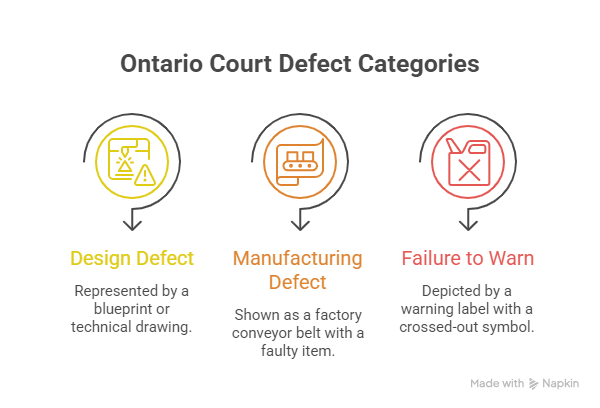
Ontario courts recognize three defect categories.
Design Defect
Every unit of the product is unsafe because the design itself is flawed. The problem is not in how it was made and the problem is in how it was conceived. A vehicle with an autopilot system failure that cannot detect stopped cars at highway speeds is a design defect. Every unit off that production line carries the same risk.
Manufacturing Defect
The design is sound, but something went wrong during production. A contaminated pharmaceutical batch, a faulty weld in a child car seat, or a defective vehicle component in an isolated production run all fall here. Only certain units are affected, not the entire product line.
Marketing Defect (Failure to Warn)
This is the most common claim type in Ontario. A failure to warn occurs when a product’s risks are not communicated clearly through labeling, instructions, or marketing. Inadequate labeling on toxic chemicals, missing drug interaction warnings, or misleading marketing that downplays known hazards all qualify. The duty to warn applies even when the product works exactly as designed. In pharmaceutical and medical device cases, the manufacturer’s duty also extends to warning prescribing physicians and patients about known risks.
How Much Is a Product Liability Claim Worth in Ontario?
Settlement value depends on injury severity, the strength of causation evidence, and the defendant’s conduct. There is no fixed number.
Compensatory Damages
Compensatory damages cover your actual losses. They include general damages for pain and suffering (Ontario’s cap is approximately $430,000 for the most catastrophic accident cases), special damages for medical costs and lost income, future care costs calculated by actuaries, and loss of consortium for the impact on family relationships.
Punitive Damages
Punitive damages are rare. Courts award them when a manufacturer’s conduct was especially reckless or deliberate, for example, knowingly suppressing safety data about asbestos exposure or PFAS contamination. When awarded, they are added on top of compensatory amounts.
Average Settlement Ranges in Ontario
| Injury Type | Estimated Settlement Range |
|---|---|
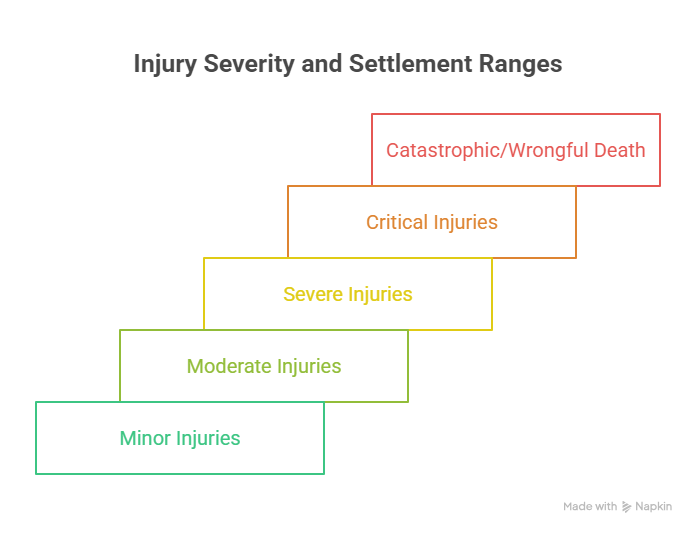
| Minor injury (short recovery, no lasting effects) | $15,000 – $50,000 |
| Moderate injury (fractures, nerve damage) | $50,000 – $200,000 |
| Serious injury (permanent disability, organ damage) | $200,000 – $1,000,000+ |
| Catastrophic injury (paralysis, brain damage) | $1,000,000 – $5,000,000+ |
| Wrongful death claim | $500,000 – $3,000,000+ |
These are general estimates. Your actual product liability compensation in Ontario depends on your specific facts, the quality of evidence, and how well your case is built. For context on how these figures compare across case types, review civil litigation settlement amounts in Ontario.
What Factors Affect the Value of a Defective Product Injury Settlement?
Injury severity is the single biggest driver. A catastrophic injury compensation produces significantly higher damages than one with full recovery.
Causation evidence is critical. You need clear proof linking the defect to your injury. Medical records, incident reports, product testing, and expert testimony from engineers or medical specialists all strengthen causation. The role of evidence in building a strong case is especially important in pharmaceutical product liability, chemical exposure injury, and defective medical device cases.
Regulatory compliance history matters. If the manufacturer violated industry standards, ignored prior complaints, or if similar fact evidence shows other victims suffered the same harm, that strengthens your position.
Contributory negligence reduces your award. If you misused the product and contributed to the injury, Ontario law reduces your compensation proportionally. If you were 20% at fault, you recover 80% of assessed damages.
Maximum medical improvement affects timing. Lawyers and insurers wait until you reach this point before finalizing settlement to accurately project future care costs and long-term income loss. For injuries involving persistent pain after the initial harm, understanding soft tissue injury settlements in Ontario provides useful context on how ongoing symptoms affect claim value.
Product liability settlements in Ontario range from $40K to over $1.5M. Our lawyers will evaluate your specific case.
What Is the Time Limit to File a Product Liability Claim in Ontario?
You have two years. The two-year limitation period under Ontario’s Limitations Act, 2002 runs from the date you discovered, or reasonably should have discovered, that a product caused your injury.
Exceptions apply:
- Minors: The clock does not start until they turn 18.
- Latent illness: For mesothelioma from asbestos exposure, non-Hodgkin lymphoma, liver damage from PFAS contamination, or other chronic health conditions, time starts when you connect the illness to a product. The clock does not start at the time of exposure.
- Wrongful death: The limitation period runs from the date of death or the date the cause was discovered. If you have lost a family member due to a defective product, learn more about how to file a wrongful death lawsuit in Ontario.
Do not wait. Evidence deteriorates and witnesses become unavailable. Filing early gives your case its best foundation.
How to File a Product Liability Claim in Ontario
Step 1: Preserve the product: Do not discard or repair it. The defective item is your primary evidence.
Step 2: Document everything immediately: Photograph injuries, get medical attention, and keep every treatment record and receipt. Proper documentation from day one protects your claim at every stage.
Step 3: Consult a personal injury lawyer: Product liability claims require technical defect analysis, retained experts, and experience dealing with corporate defendants. A lawyer assesses merit and potential value early.
Step 4: Investigate the defect: Your lawyer retains engineers, medical professionals, or industry specialists to examine the product and establish what went wrong. In cases involving a medical device or pharmaceutical, the investigation may also involve reviewing regulatory approvals, recall notices, and safety testing records.
Step 5: Demand or commence proceedings: Your lawyer notifies the defendant and attempts negotiated settlement. If that fails, a Statement of Claim is filed in Ontario court.
Step 6: Discovery and negotiation: Both sides exchange evidence. Most product liability cases in Ontario settle at this stage.
Step 7: Settlement or trial: A fair agreement ends the case. If not, a judge decides.
We recently worked with a client injured by a defective medical device who had already missed several months of follow-up appointments, thinking the injury was unrelated to the product. Once we connected the dots and retained the right expert, the case resolved with a settlement that covered all future care costs. Acting early and preserving evidence made the difference.
Class Action vs. Individual Claim: Which Path Is Right for You?
An individual claim is stronger when your injuries are serious and your losses are significant. You keep the full settlement amount, and the case is built around your specific damages. Deciding whether to settle your personal injury case or go to trial is a critical part of this process.
Class action certification is appropriate when the same defect harmed many people. It groups all affected claimants into one lawsuit. This is common in pharmaceutical product liability cases, asbestos exposure litigation, PFAS contamination claims, and defective medical device recalls. The tradeoff is that individual payouts are lower because compensation is divided among all class members.
A lawyer will assess which path maximizes your recovery based on the nature of the defect and the extent of your injuries.
Why Maana Law Is the Right Choice for Your Product Liability Claim in Ontario
Product liability cases are technically complex and go up against well-funded corporate defendants. You need a lawyer who builds the case properly from day one.
At Maana Law, Mississauga’s personal injury firm, we handle every case with direct partner involvement and a client-first approach.
No win, no fee: You pay nothing unless we recover compensation.
Free consultation: Honest assessment of your case and its potential value, at no cost.
Expert-backed investigation: We retain engineers, medical professionals, and industry specialists tailored to your specific defect type.
Direct lawyer access: You work with Aman Kalra directly, not a rotating team of assistants. Fluent in English and Hindi.
Home and hospital visits: We come to you if your injuries prevent travel. Virtual consultations are available.
Proven results: Millions recovered for personal injury clients across Erin Mills, Cooksville, Meadowvale, and communities across Mississauga.
If a defective product injured you, contact our product liability lawyer in Mississauga today for a free consultation. The sooner you act, the stronger your case.
Frequently Asked Questions
How long does a product liability settlement take in Ontario?
Most cases resolve within 12 to 36 months. Clear liability and documented injuries speed things up. Complex cases involving class action certification, multiple defendants, or catastrophic injury compensation take longer.
Can I still file a claim if I was partly at fault?
Yes. Ontario’s contributory negligence rules reduce your compensation proportionally but do not eliminate it. If the product was 80% responsible, you recover 80% of assessed damages. This is one of the common challenges in personal injury claims that a lawyer can help you address.
What if the manufacturer is based outside Canada?
You can still pursue a claim. If the product was sold in Ontario, Canadian courts often have jurisdiction over foreign manufacturers. Canadian importers and retailers can also be named as defendants.
Do I need expert testimony?
In most serious cases, yes. Expert testimony establishes the defect, links it to your injury, and supports future cost projections. Your lawyer identifies and retains the right expert for your specific claim. Many product defect injuries fall into the category of hard-to-prove injuries, making expert evidence essential.
What is the difference between a product liability claim and a warranty claim?
A warranty claim is a contract matter between you and the seller and typically covers repair or replacement. A product liability claim in tort covers personal injury damages, pain and suffering, lost income, and future care costs. A warranty claim does not cover these. For a broader view of how injury compensation works in Ontario, the Government of Canada consumer protection guide outlines your rights when products cause harm.
Conclusion
If a defective product injured you in Ontario, you have legal rights and a path to fair compensation. The strength of your claim depends on acting quickly, preserving evidence, and working with a lawyer who understands product liability law.
Contact Maana Law | 90 Matheson Blvd W, Suite 101, Mississauga, ON. Book your free consultation today. Home visits and virtual meetings available.
Your recovery is the priority. Let us handle the legal side.