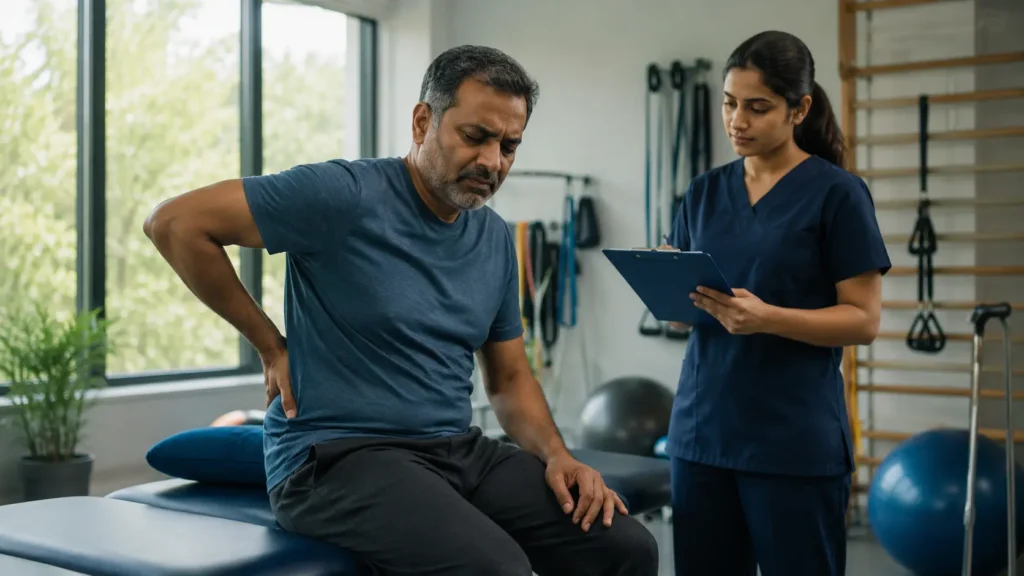
A soft tissue injury is supposed to heal. Most sprains and strains resolve within six to twelve weeks. But for many accident victims in Ontario, the pain does not stop there. It lingers, limits daily function, and eventually raises serious questions about insurance, disability, and legal rights. When pain becomes chronic, working with a personal injury lawyers helps protect both your health claim and your legal options. An experienced soft tissue injury lawyer can guide you through the insurance and legal process from the start.
This guide covers what to do if your soft tissue injury has turned into long-term pain:
- Why some injuries progress to chronic pain syndrome
- The medical steps that protect both your health and your claim
- How Ontario insurance law handles persistent soft tissue pain
- What documentation you need for a successful claim
- When to involve a lawyer
Soft tissue injury settlements in Ontario range from $15K to over $500K. Our lawyers will evaluate your specific case.
Why Some Soft Tissue Injuries Become Chronic
Long-term pain after a soft tissue injury happens when normal tissue healing stalls or breaks down. It is not unusual, and it is not imaginary.
Managing soft tissue injuries affect muscles, tendons, ligaments, and connective tissue. Common types include muscle strain, ligament sprain, contusion, tendonitis, and bursitis. When these injuries do not heal properly, several complications set in:
- Scar tissue forms incorrectly, reducing flexibility and causing ongoing stiffness
- Joint instability develops after ligament damage, creating repeated micro-trauma
- Nerve damage or compression causes numbness, tingling, or radiating pain that outlasts the original injury
- Psychosocial factors such as catastrophisation and fear avoidance slow recovery and feed into chronic pain syndrome
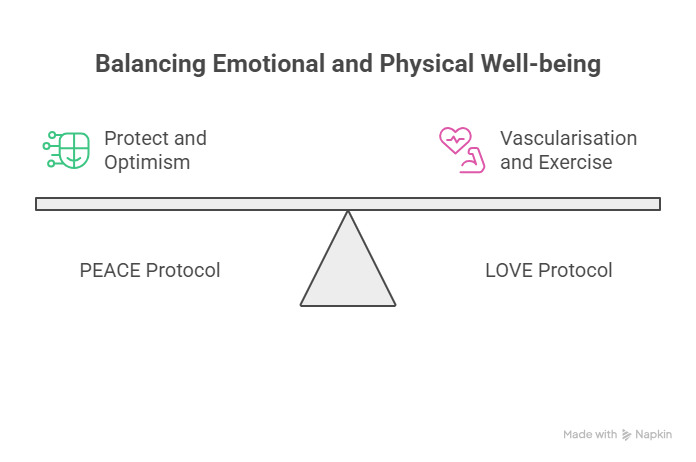
The PEACE and LOVE protocol, which replaced the older RICE protocol in clinical practice, directly addresses these physical and psychological dimensions. PEACE covers Protect, Elevate, Avoid anti-inflammatory modalities, Compress, and Educate. LOVE covers Load, Optimism, Vascularisation, and Exercise. The inclusion of optimism and education reflects how much patient mindset affects tissue healing outcomes.
When a patient reaches maximum medical improvement and pain persists, the injury is clinically classified as chronic. In Ontario’s legal framework, this classification has direct consequences for accident benefits and tort claims.
Medical Steps to Take When the Pain Is Not Resolving
Get a Formal Diagnosis and Document Everything
The first step is a written diagnosis from a physician that identifies the specific injury, its severity, and its functional impact. Do not rely on emergency discharge notes alone. Follow up with your family doctor and ask for written records at every appointment.
A daily pain diary documenting pain levels, activities you can no longer perform, and how the injury affects sleep, work, and household tasks is equally important. This kind of proper documentation in a personal injury case is difficult for an insurer to dismiss when it is consistent and detailed.
For injuries that do not show on standard X-rays, push for imaging such as MRI or ultrasound. These confirm soft tissue damage and rule out complications including compartment syndrome, heterotopic ossification, and nerve damage.
Follow a Structured Rehabilitation Plan
Physical therapy is the standard treatment pathway for a soft tissue injury not healing. A physiotherapist uses gradual loading and progressive strength training to stimulate repair through mechanotransduction, the process by which controlled mechanical stress encourages tissue regeneration.
Proprioception training is particularly important after ligament sprains. It retrains the joint’s positional awareness, reducing the risk of re-injury and joint instability. Aerobic exercise and vascularisation activities increase blood flow to damaged tissue, supporting healing at a cellular level.
Pacing activity levels matters too. Overloading healing tissue too quickly causes setbacks. A structured, progressive plan is more effective than pushing through pain.
Seek Specialist Referrals
If your family doctor or physiotherapist cannot adequately control your pain, ask for a referral to a physiatrist, orthopedic specialist, or chronic pain clinic. In Ontario, specialist assessments carry significant weight in both insurance and legal proceedings. A understanding chronic pain injury diagnosis from a specialist is much harder for an insurer to dispute than a general note.
Don’t suffer in silence. Ontario soft tissue injury victims recover $15K to $500K+. Let Aman Kalra assess your claim today.
How Ontario Insurance Law Treats Long-Term Soft Tissue Pain
Ontario’s Statutory Accident Benefits Schedule (SABS) governs motor vehicle accident claims. Understanding how it handles chronic soft tissue pain after a car accident in Ontario is necessary before you make any decisions about your claim.
The Minor Injury Guideline and Its Cap
Under the Minor Injury Guideline (MIG), soft tissue injuries such as sprains, strains, and contusions are presumed minor, with a treatment benefit cap of $3,500. This cap does not apply if the injury results in a chronic condition or if pre-existing conditions complicate recovery.
If your injury has caused persistent pain beyond twelve weeks with documented functional limitations, your treatment may qualify for benefits outside the MIG. This requires supporting medical documentation from your treating practitioners. Understanding how to prove hard-to-verify injuries is critical at this stage.
Permanent Impairment and Expanded Benefits
Can soft tissue injuries become permanent in Ontario? Yes. When a soft tissue injury fails to heal and results in lasting functional limitations, it qualifies as a permanent impairment. This classification supports both ongoing accident benefits and a tort claim against the at-fault driver. Learn more about soft tissue injury settlements in ontario to understand what compensation may be available.
For injuries causing significant and permanent impairment, Ontario also allows claimants to seek a catastrophic accidents, which unlocks substantially higher benefit limits. Most soft tissue injuries do not reach this threshold, but catastrophic injuries compensation sometimes do.
Documenting for a Disability Claim
A soft tissue injury disability claim in Ontario requires a higher standard of proof than accident benefits. Long-term disability insurers require evidence that you cannot perform the duties of your own occupation, and in later policy periods, any occupation. Medical records alone are rarely sufficient. Functional capacity evaluations, independent medical examinations, and vocational assessments are typically required. Review long-term disability settlement amounts in Ontario to understand what these claims are worth.
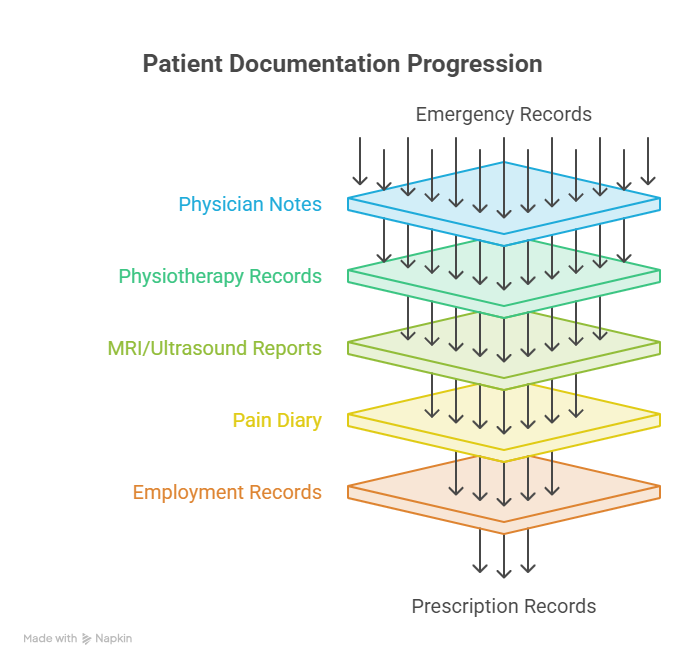
The table below summarizes the key documents that support both accident benefits and disability claims:
| Document Type | Why It Matters |
|---|---|
| Emergency and hospital records | Establishes injury timeline from the accident date |
| Physician and specialist notes | Confirms diagnosis and ongoing treatment |
| Physiotherapy records | Shows consistent rehabilitation attendance |
| MRI or ultrasound reports | Provides objective evidence of tissue damage |
| Pain diary | Documents daily functional limitations |
| Employment records | Supports income replacement claims |
| Prescription records | Confirms ongoing medical need |
Pursuing a Chronic Pain Claim After a Soft Tissue Injury in Ontario
A soft tissue injury turned into a chronic pain claim in Ontario gives you two potential compensation avenues: accident benefits through your own insurer and a tort claim against the at-fault party.
A tort claim for chronic pain must satisfy Ontario’s verbal threshold, meaning you must show serious and permanent impairment of an important physical, mental, or psychological function. Documented chronic pain syndrome with measurable functional limitations can meet this standard.
Time limits apply strictly. In Ontario, you generally have two years from the accident date to commence a tort action. Shorter deadlines apply for notice requirements to the insurer. Missing these deadlines can permanently end your claim. Knowing when to hire a car accident lawyer in Ontario helps you avoid missing critical filing windows.
One common mistake accident victims make is stopping medical treatment when an insurer questions the ongoing expense. Gaps in treatment are used to argue the injury has resolved. Consistent attendance at medical appointments and physiotherapy protects the documentation needed for the long-term effects of your soft tissue injury.
Why Maana Law Is the Right Choice for Soft Tissue Chronic Pain Claims
Soft tissue and chronic pain cases are among the most contested claims in Ontario personal injury law. Insurers routinely dismiss them as unverifiable.
Proven experience in chronic pain advocacy: Aman Kalra and the Maana Law team have built soft tissue and chronic pain cases across Mississauga and Ontario that survive insurer scrutiny and proceed successfully through the claims process.
Medical record coordination: The firm helps clients gather and organize documentation needed to move claims outside the Minor Injury Guideline and into tort proceedings.
No win, no fee: Maana Law works on a contingency basis. You pay nothing unless your case succeeds.
Accessible representation: Free consultations are available in-person at 90 Matheson Blvd W Suite 101, Mississauga, or virtually. Home and hospital visits are available for clients who cannot travel.
Multilingual service: The team communicates in English and Hindi, serving communities across Erin Mills, Cooksville, Meadowvale, and Churchill Meadows.
If your pain has lasted longer than expected and your insurer is pushing back, contact our soft tissue injury lawyer for a free consultation before your deadlines pass.
Frequently Asked Questions
How long does a soft tissue injury take to become chronic?
Pain persisting beyond twelve weeks without clear improvement is generally classified as chronic. In Ontario’s insurance framework, documented symptoms after that period can support a claim outside the Minor Injury Guideline. The Ontario auto insurance standard benefits outline these coverage thresholds.
Can I still make a claim if my injury was not taken seriously right after the accident?
Yes, though early gaps in treatment complicate the case. Consistent medical documentation from this point forward, combined with taking the right steps after your motor vehicle accident, can still support a valid claim.
What is the difference between accident benefits and a long-term disability claim in Ontario?
Accident benefits are paid by your own auto insurer under SABS regardless of fault. A long-term disability claim falls under a separate employer or private insurance policy. The documentation requirements and timelines differ significantly between the two.
Does Ontario insurance cover ongoing physiotherapy for chronic soft tissue pain?
Outside the Minor Injury Guideline, medical and rehabilitation benefits can cover ongoing physiotherapy up to policy limits. Insurers frequently dispute medical necessity, and a soft tissue injury lawyer can assist in challenging unreasonable denials.
What if the insurer says my injury does not meet the tort threshold?
This is a legal argument, not a medical fact. Research from the International Association for the Study of Pain supports chronic pain as a recognized medical condition. A personal injury lawyer can review your records and functional history to determine whether your impairment qualifies and can represent you if the insurer disputes it.
Conclusion
Soft tissue pain that does not resolve is a medical condition and a legal issue. In Ontario, documented chronic pain can support claims outside the Minor Injury Guideline, civil litigation settlement amounts, and tort actions against at-fault parties.
Act before time limits close your options. Contact Maana Law at 90 Matheson Blvd W Suite 101, Mississauga, ON for a free consultation. Virtual appointments and home visits are available.