
Yes, a soft tissue injury settlement Ontario claim is often worth pursuing, especially when symptoms last for months or affect your ability to work. These injuries look minor on paper, but they can cause real pain, lost income, and long recovery times. The challenge is that insurers treat soft tissue injuries as small claims and try to settle them cheaply. Knowing how these settlements are valued helps you avoid accepting far less than your case is worth. Our Soft Tissue Injury Lawyers help accident victims in Mississauga protect that value. Here is what this guide covers: What a soft tissue injury settlement is typically worth How the statutory deductible and minor injury cap reduce payouts The evidence that strengthens your claim The deadline to file in Ontario This article is general information, not legal advice. Speak with a licensed lawyer about your situation.
Soft tissue injury settlements in Ontario range from $15K to over $500K. Our lawyers will evaluate your specific case.
Are Soft Tissue Injury Settlements Worth Pursuing in Ontario?
Yes, in most cases they are worth pursuing when the injury affects your daily life or income. A soft tissue injury claim Ontario can recover money for pain and suffering damages, lost wages, and medical costs even when no bone is broken. A soft tissue injury affects muscles, tendons, and ligaments rather than bone. Common types include sprains and strains, whiplash associated disorder, tendonitis, and ligament damage. Because these injuries do not show on a standard X-ray, insurers often downplay them. Soft tissue conditions are among the hardest injuries to prove injuries, which is exactly why documentation matters from day one. That does not mean they lack value. For example, a delivery driver with chronic neck pain after a rear-end crash may be unable to lift or turn comfortably for a year. Even without a fracture, the loss of income and ongoing functional limitations can support a meaningful settlement. However, Ontario sets a strict filing deadline that can end your claim entirely. Make sure you understand how long after an accident you can sue in Ontario. so, you do not lose your right to that compensation.
How Much Is a Soft Tissue Injury Settlement Worth in Ontario?
There is no fixed number. Most soft tissue claims settle in a wide range, and the average soft tissue injury settlement Ontario figures you see online can be misleading because every case is different. The value depends on a few key factors: Severity and duration. A short recovery is worth less than understanding chronic pain syndrome or fibromyalgia. Impact on work. Loss of income and reduced future earning capacity raise the value. Medical costs. Rehabilitation costs, physical therapy, and treatment add to the claim. Evidence quality. Strong causation evidence and a clear prognosis support a higher figure. Asking how much is a soft tissue injury settlement worth in Ontario really means asking how badly the injury changed your life. Whiplash settlement amounts Ontario for mild cases that heal quickly are often modest, while a permanent impairment can be worth substantially more. For example, a mild whiplash that resolves in weeks may settle for a few thousand dollars, while disabling chronic pain can reach six figures. When soft tissue symptoms do not resolve, the claim can overlap with steps to take soft tissue claims that carry higher value.
How Does the Statutory Deductible Affect Your Payout?
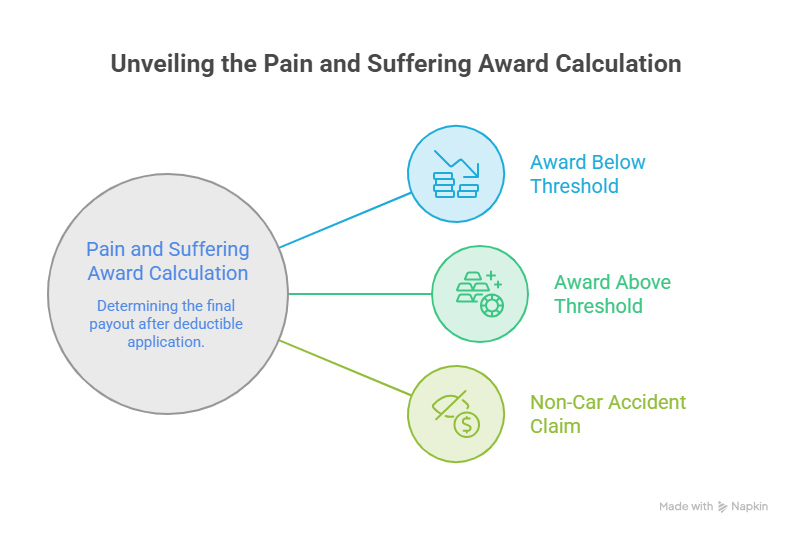
In car accident cases, a statutory deductible is taken off your pain and suffering award, which can shrink or erase it. This is the single biggest reason a soft tissue injury car accident settlement Ontario can be worth less than people expect. Under Ontario’s Insurance Act, non-pecuniary damages from a motor vehicle accident are reduced by a deductible unless the award passes a monetary threshold. For 2026, the deductible is $47,913.01, and it vanishes only if the award exceeds $159,708.71. For example, if a court values your pain and suffering settlement soft tissue injury Ontario award at $100,000, the deductible cuts it to about $52,086.99. If the award reaches $160,000, you keep the full amount. Importantly, this deductible applies to car accidents, not to slip and fall accidents or other tort claims, so the type of accident matters. If an insurer has offered you a quick settlement, the team at Maana Law can check whether it reflects the deductible and the true value of your claim.
What Is the Minor Injury Cap in Ontario?
The minor injury cap limits your accident benefits, not your lawsuit, to $3,500 for treatment if your injury is classified as minor. This is separate from the deductible and often confused with it. The cap comes from the Minor Injury Guideline within the Statutory Accident Benefits Schedule. It places sprains, strains, and mild whiplash into a category with a $3,500 limit for medical and rehabilitation benefits paid by your own insurer. Your tort claim against the at-fault driver is a separate path and is not capped this way. For example, a claimant placed in the minor injury category may hit the $3,500 limit after a few months of physical therapy. With strong medical evidence showing the injury is not minor, a lawyer can argue to move the claim out of that category and unlock more benefits. Injuries that escalate beyond mild strains, such as those leading to catastrophic accidents, fall outside the cap entirely.
Don’t let insurers undervalue your pain. Ontario soft tissue injury victims recover $15K to $500K+. Let Aman Kalra maximize your claim today.
What Evidence Do You Need to Win a Soft Tissue Injury Claim?
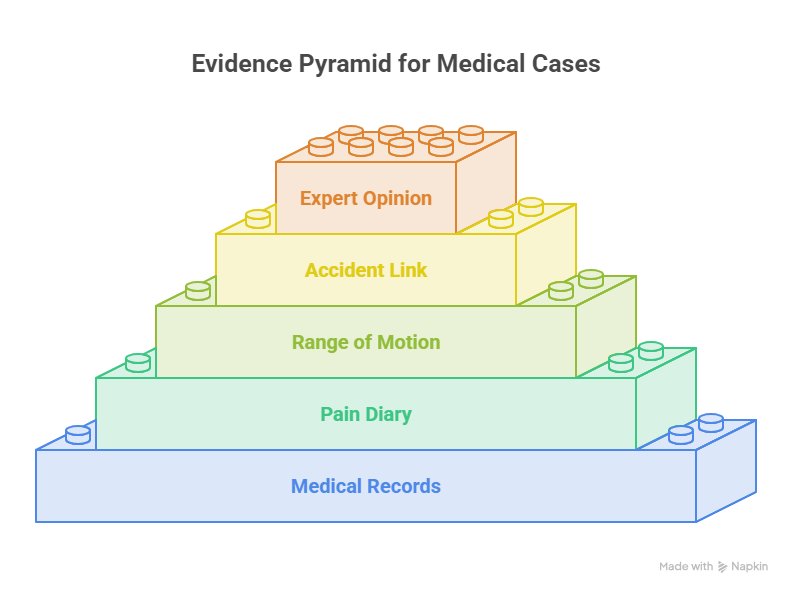
You need clear medical proof that the injury exists, that the accident caused it, and that it limits your life. Soft tissue claims rise or fall on proper documentation, because there is no fracture to point to. The strongest claims include: Consistent medical documentation from doctors and specialists A pain diary tracking symptoms, flare-ups, and limitations over time Records of range of motion loss and functional limitations Causation evidence linking the injury directly to the accident An expert medical opinion at maximum medical improvement For example, a claimant who saw a doctor right after the crash, attended therapy, and kept a pain diary presents a far stronger case than someone with a six-month gap in treatment. Insurers use those gaps to argue the injury was minor or unrelated. Knowing how to recognize and manage soft tissue injuries early gives your claim the strongest possible foundation.
How Long Do You Have to File a Soft Tissue Injury Claim in Ontario?
You generally have two years from the accident to start a lawsuit. Missing this deadline can end your right to sue, no matter how strong the claim is. Under the Limitations Act, 2002, the two-year limitation period applies to most personal injury tort claims. Accident benefits have their own shorter notice and application deadlines, often within days or weeks, so acting early matters on both tracks. For example, someone who assumes a sore neck will heal and waits more than two years to file may lose the claim entirely, even if the pain later becomes chronic. Getting advice soon after the accident protects every option. Our guide on what to do after a car accident in Ontario covers the steps that protect both your health and your legal rights from day one.
Why Maana Law Is the Right Choice for Soft Tissue Injury Claims
Choosing the right firm changes how confident you feel about your claim. Personal injury Law brings over a decade of experience advocating for accident victims in Mississauga and across the Greater Toronto Area. Here is what sets the firm apart. No Win, No Fee representation. You pay legal fees only if your claim succeeds, so cost is never a barrier. Soft tissue and chronic pain focus. The team understands deductibles, threshold injury arguments, and insurer tactics, so you negotiate from strength. Free, accessible consultations. Virtual meetings plus home and hospital visits make support easy to reach while you recover. Clear, personal communication. Led by Aman Kalra, the firm explains your options plainly and reviews any offer carefully. Strong local track record. Favorable settlements and 5-star client reviews reflect client-first service across Mississauga communities including Meadowvale, Streetsville, and Applewood. When an insurer is trying to settle fast, a focused local team gives you a clear advantage.
Frequently Asked Questions
Are soft tissue injuries taken seriously in court?
Yes, when they are well documented. Courts recognize that chronic pain and functional limitations are real, even without a fracture, as long as medical evidence and causation support the claim.
Does the deductible apply to slip and fall soft tissue injuries?
No. The statutory deductible applies only to motor vehicle accident pain and suffering awards. A slip and fall claim settlement is not reduced by it, which can make those claims worth more on the same award.
Can I claim if I was partly at fault?
Often yes. Ontario uses contributory negligence, so your compensation may be reduced by your share of fault rather than eliminated. A soft tissue injury lawyer can assess how liability affects your settlement.
Do soft tissue settlements include lost wages?
Yes. Beyond pain and suffering, you can claim loss of income, future earning capacity, and out-of-pocket medical and rehabilitation costs, plus prejudgment interest.
Should I accept the insurer’s first offer?
Usually not. Early offers are often low and may ignore future treatment or the deductible. Our guide on whether to settle or go to trial explains the factors worth weighing before you sign any release.
Conclusion
A soft tissue injury can be worth pursuing when it disrupts your work, your health, or your daily life. The real value depends on your evidence, the type of accident, and rules like the deductible and the minor injury cap. You do not have to sort through this alone. Contact Maana Law in Mississauga, ON for a free consultation to review your claim and explain your options. Call the team or book a consultation at 90 Matheson Blvd W, Suite 101 before you accept any offer.