

Steps to Take Immediately After a Dog Bite Incident
If you’ve been bitten by a dog in Ontario, it’s crucial to act immediately to ensure your health and protect your legal rights. The first step is to seek medical care, even for minor bites, as dog bites can lead to serious infections like rabies and tetanus. Quickly addressing the situation can help minimize complications and provide the documentation needed for any potential legal or insurance claims.
Dog bites can result in both physical injuries and emotional distress, so knowing the proper steps to take right away is essential for your recovery and securing fair compensation. Whether the injury is minor or severe, following the right process can have a significant impact on the outcome of your case. Understanding the legal responsibility dog owners Ontario can help you navigate these initial moments.
Don’t wait. Address the situation as soon as possible to safeguard your health, protect your legal rights, and ensure you’re following the required steps under Ontario law.
Prioritize Immediate Safety and Medical Care
When you’ve been bitten by a dog, your first priority should always be your safety and well-being. Here’s how you can manage the immediate aftermath of a dog bite, including tips for preventing dog bite further injury:
Ensure Your Safety and Remove Yourself from Danger
Before addressing the injury, make sure that you’re no longer in danger. Move away from the dog to avoid further harm. If the dog is aggressive, try to find shelter or call for help. Ensuring your safety is the first critical step to avoid additional injuries.
Administer Essential First Aid to the Wound
Once you’re safe, the next step is to handle the wound. Here’s what to do:
- Clean the wound: Use clean water to wash the bite area. Avoid scrubbing the wound to prevent further damage.
- Control the bleeding: Apply pressure using a clean cloth or bandage. If bleeding is severe, raise the injured area above heart level to slow the flow.
- Apply antiseptic: After cleaning the wound, apply antiseptic to reduce the risk of infection.
Seek Professional Medical Attention Without Delay
Even if the wound seems minor, it’s important to see a doctor immediately. Dog bites can result in serious infections like rabies or tetanus, particularly if the dog was not vaccinated. A healthcare provider will:
- Assess the injury: Determine the severity of the wound and whether stitches or further treatment is necessary.
- Administer a tetanus shot: If the wound is deep, a tetanus shot may be required.
- Provide a rabies post-exposure prophylaxis (PEP) if necessary, especially if the dog’s vaccination history is unknown.
Medical attention is crucial for preventing infections, ensuring proper healing, and addressing any potential complications from the bite.
Collect Crucial Information and Evidence at the Scene
Once you’ve ensured your safety and received initial medical care, it’s essential to gather as much information as possible. Proper documentation and evidence collection can strengthen your case, whether for a legal claim or for reporting purposes.
Identify the Dog and Secure Owner Details
One of the first things you should do after a dog bite is to identify the dog involved. This includes:
- Dog’s breed, size, and color: Take note of these details to help authorities identify the dog.
- Owner’s information: Get the contact information of the dog’s owner, including their name, address, and phone number. This is vital for any insurance claims or legal actions you may need to pursue.
Document the Incident and Your Injuries Thoroughly
The more evidence you collect, the stronger your case will be. Make sure to:
- Take photographs: Capture clear images of the dog bite wound, any visible swelling, bruising, or punctures. It’s also helpful to photograph the scene of the incident and the dog.
- Write down details: Note the time, location, and circumstances of the incident. Include the dog’s behavior and any other factors that may be relevant (such as whether the dog was on a leash).
- Witness information: If anyone witnessed the attack, get their contact details and ask for a statement, as their account can serve as an important piece of evidence.
Avoid Discussing Fault or Liability
While it may be tempting to engage in a conversation about the incident with the dog’s owner or any bystanders, it’s best to avoid discussing fault or liability at the scene. In some cases, admitting fault or making assumptions can complicate your claim later on. Stick to gathering facts and focus on immediate safety and medical needs.
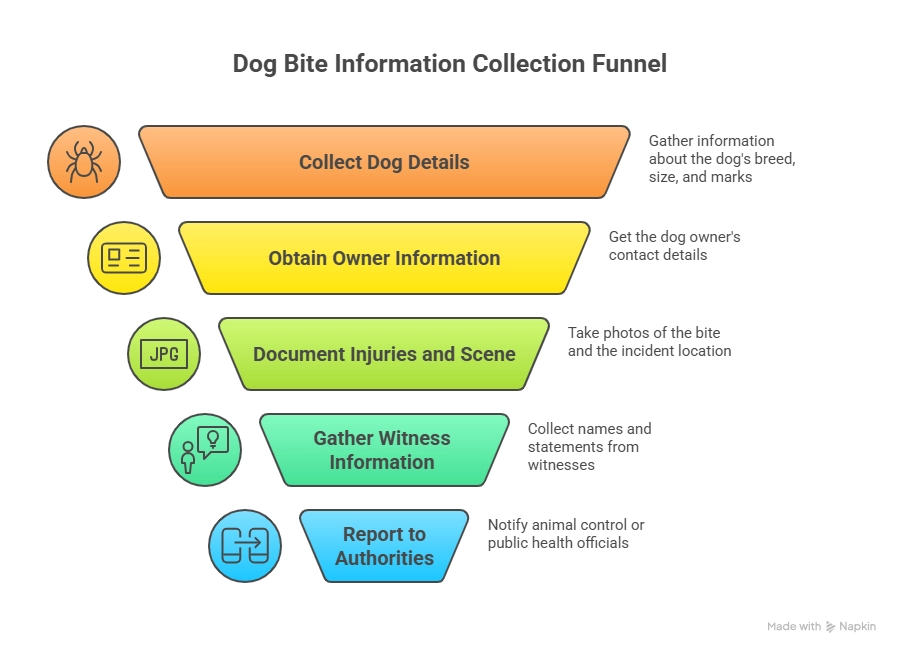
What Information to Collect After a Dog Bite Incident
After a dog bite, collecting information is crucial for strengthening your case and ensuring the proper authorities handle the situation. Here’s what you should gather:
-
Dog’s Identification:
-
Breed, size, and color: Take note of the dog’s breed, size, and color to help authorities identify it.
-
Physical markings: Look for any distinct marks, such as scars, spots, or unusual features that can help distinguish the dog.
-
Vaccination status: If possible, ask the owner for the dog’s vaccination history, especially regarding rabies.
-
-
Dog Owner’s Details:
-
Name, address, and contact number: Get the dog owner’s full contact information for any insurance claims or legal action.
-
Insurance information: If available, ask the owner for their homeowner’s or renter’s insurance details. This may be used to cover medical expenses and damages.
-
-
Incident Documentation:
-
Time and date: Record the time and date of the incident.
-
Location: Note the exact location where the attack occurred (e.g., public park, private property).
-
Behavior of the dog: Observe and document the dog’s behavior before and during the incident. Was the dog aggressive, acting unusually, or showing signs of being provoked?
-
-
Witness Information:
-
Names and contact info: If there were any witnesses to the attack, collect their names, contact details, and statements about what they saw. Their testimony can help support your case.
-
Witness statements: Ask witnesses to write down what they saw and how the incident unfolded, as their input can provide essential context.
-
-
Photographic Evidence:
-
Injury photos: Capture clear and detailed photographs of your injury, as well as the surrounding area and the dog (if possible). These images will serve as key evidence when filing claims.
-
Scene photos: Take pictures of the location where the attack happened. Include any environmental factors, such as whether the dog was on a leash or if there were any hazards present.
-
Report the Dog Bite to the Proper Authorities
In Ontario, dog bites must be reported to the appropriate authorities to ensure proper handling and prevent future incidents. Here’s what you need to do:
Contact Your Local Public Health Unit
It’s important to report the dog bite to your local Public Health Unit (PHU). The PHU is responsible for tracking rabies exposure and monitoring the health risks related to the incident. When reporting:
- Provide incident details: Include the date, time, location, and any information about the dog’s vaccination status.
- Rabies concerns: The PHU will advise if rabies post-exposure prophylaxis (PEP) is needed, based on the dog’s vaccination history and other factors.
Notify Animal Control or Animal Services
In Ontario, animal control or animal services must be notified about the bite. These agencies are responsible for enforcing leash bylaws and ensuring that dogs are safely contained. Reporting to animal control helps:
- Prevent future attacks: Authorities may assess whether the dog should be quarantined, muzzled, or kept on a leash.
- Animal behavior assessment: Animal control may also evaluate the dog’s behavior, especially if there are concerns about aggression or if it’s a repeat offender.
Follow Up on Rabies Exposure and Animal Observation
If the dog is suspected of being rabid or if its vaccination status is unclear, authorities will need to observe the animal for signs of rabies. In some cases, the dog may need to be quarantined. You may be required to follow up with animal control to ensure the proper observation and reporting protocols are followed.
Reporting the incident to the appropriate agencies is not only a legal requirement but also crucial for protecting yourself and others from future harm.
Understand Your Legal Rights Under Ontario Law
Being involved in a dog bite incident in Ontario means you have specific legal rights. Understanding these rights can help you navigate the situation and protect your interests moving forward.
The Dog Owners’ Liability Act (DOLA): Strict Liability
Ontario’s Dog Owners’ Liability Act (DOLA) holds dog owners strictly liable for injuries caused by their dogs, even if the dog has never shown aggression before. This means that if a dog bites or attacks someone, the owner is legally responsible for the damages, regardless of whether the attack was provoked. In some cases, if the owner knew their dog had dangerous tendencies, the liability may be more severe.
When to Consult a Personal Injury Lawyer
When you’ve been bitten by a dog, your first priority should always be your safety and well-being. Here’s how you can manage the immediate aftermath of a dog bite, including tips for preventing dog bite further injury:
- Evaluate your case: Determine the strength of your claim based on the extent of your injuries, documentation, and any evidence collected.
- Negotiate settlements: Help secure compensation for medical expenses, lost wages, and emotional distress.
- Represent you in court: If a settlement can’t be reached, your lawyer will guide you through the legal process to pursue a fair resolution.
Potential Damages and Compensation for Dog Bite Injuries
Dog bite injuries can lead to physical, emotional, and financial challenges. Potential damages include:
- Medical expenses: Costs for treatments, medications, and rehabilitation.
- Lost wages: If the injury impacts your ability to work.
- Pain and suffering: Compensation for the physical and emotional distress caused by the bite.
- Permanent scars or disability: If the injury results in long-term effects, you may be entitled to additional compensation.
Having a clear understanding of the legal framework in Ontario ensures that you know what compensation you may be entitled to and how to seek it.
Manage Documentation and Insurance for Your Claim
After a dog bite, organizing and documenting everything related to your injury is crucial for building a solid case, especially when dealing with insurance companies and pursuing compensation. Here’s how to effectively manage your documentation:
Systematically Document All Aspects of Your Injury and Recovery
From the moment of the dog bite until your full recovery, it’s essential to maintain detailed records of all events related to your injury:
- Photographs: Keep a photographic record of your wound’s progression, showing how it heals over time.
- Medical records: Obtain copies of your doctor’s visits, prescriptions, diagnostic reports, and any medical treatments you receive.
- Incident report: Ensure that you have a copy of the animal control report or public health documentation stating the details of the incident and the dog’s behavior.
- Witness statements: If there were any witnesses, get their written statements that corroborate your account of the incident.
This documentation will serve as crucial evidence if you need to pursue a claim or litigation in the future. Following the steps after a dog bite correctly can help secure your claim.
Understand the Role of Insurance Companies
Insurance companies will likely play a role in covering your medical expenses or damages if the dog’s owner has a policy in place. Here’s how to deal with insurance:
- Notify your insurance company: If your health insurance covers medical treatment for dog bites, report the incident promptly.
- Dog owner’s insurance: The dog owner’s homeowner’s or renter’s insurance may cover the costs of the dog bite. Speak to your lawyer to ensure the claim is filed correctly.
- Claim negotiations: Insurance companies may try to minimize payouts. Working with a lawyer can help ensure you receive fair compensation for your injuries, medical bills, and other damages.
Managing your insurance claims and documentation in a systematic way ensures that you don’t miss any critical details that could affect your compensation.
Cope with the Aftermath and Plan for Recovery
Recovering from a dog bite goes beyond just physical healing—it also involves addressing the emotional and psychological impacts of the incident. This section outlines how to manage both the physical and mental aspects of your recovery.
Address Emotional and Psychological Impacts
A dog bite can be a traumatic experience, leading to emotional distress, fear, or anxiety, especially if the attack was severe. It’s common for victims to experience:
- Post-traumatic stress: Feelings of anxiety or flashbacks to the incident.
- Fear of dogs: A heightened fear of dogs, even those that seem harmless, can develop after an attack.
- Depression or anger: The physical pain and inconvenience caused by the injury can lead to emotional struggles.
Seeking support from a therapist or counselor can help you process these emotions and begin the healing journey. Additionally, support groups for dog bite victims can provide comfort and shared experiences.
Focus on Rehabilitation and Long-Term Well-being
Your recovery process may include physical rehabilitation, especially if the injury is severe or leads to long-term issues:
- Wound care: Ensure proper care for the dog bite wound to avoid complications like infections or scarring.
- Physical therapy: If the bite affects your mobility or causes nerve damage, physical therapy can help regain movement and function.
- Psychological therapy: Beyond physical rehabilitation, addressing emotional scars through therapy or counseling is vital for overall well-being.
Ensure you follow all recommended medical treatments and rehabilitation plans to maximize your recovery.
Final Considerations and Next Steps
Once immediate medical and emotional concerns are addressed, think about the long-term steps you need to take:
- Follow-up appointments: Stay on top of follow-up medical appointments to track your recovery.
- Legal steps: If you haven’t already, consult with a personal injury lawyer to discuss your case and understand your options for pursuing compensation.
- Long-term health care: Consider whether you will need ongoing treatments for scarring or psychological therapy.
The aftermath of a dog bite requires attention to both the body and the mind. Planning for recovery and taking proactive steps ensures a smoother path to full healing.
Frequently Asked Questions
1. What should I do immediately after a dog bite in Ontario?
Immediately ensure your safety by moving away from the dog to avoid further harm. Then, clean the wound with water, apply pressure to stop any bleeding, and seek professional medical care without delay. It’s important to document the injury, take photographs, and report the incident to authorities and animal control.
2. How do I report a dog bite in Ontario?
In Ontario, you should report the dog bite to your local Public Health Unit (PHU) to address potential rabies exposure. You should also notify animal control to ensure the dog is properly assessed and tracked, helping prevent future incidents. The authorities will guide you on what steps to follow next.
3. Should I see a doctor even if the bite seems minor?
Yes, even if the bite seems minor, you should seek medical attention. Dog bites can lead to infections like rabies or tetanus, and a healthcare provider will assess whether further treatment, such as a tetanus shot or rabies post-exposure prophylaxis (PEP), is necessary to prevent complications.
4. What information should I collect after a dog bite?
After a dog bite, gather crucial details like the dog’s breed, size, color, and the owner’s contact information. It’s also important to document the scene with photographs, write down the time, location, and circumstances of the attack, and collect witness statements if available. This documentation will be valuable for any legal or insurance claims.
5. Can I get compensation for a dog bite in Ontario?
Yes, if you’ve been bitten by a dog in Ontario, you may be entitled to compensation for medical expenses, pain and suffering, lost wages, and emotional distress. Under Ontario’s Dog Owners’ Liability Act (DOLA), dog owners are held strictly liable for injuries caused by their pets. It’s important to consult with a personal injury lawyer to explore your legal options and maximize your compensation.
Conclusion
A dog bite incident can be overwhelming, but by taking the right steps immediately, you can protect your health, document the event thoroughly, and ensure that you’re prepared for any legal or insurance actions that may follow. In Ontario, following proper procedures, reporting to authorities, seeking medical care, and understanding your legal rights under the Dog Owners’ Liability Act can make a significant difference in your recovery and potential compensation.
Remember to:
- Prioritize safety and medical care.
- Collect and document all relevant evidence.
- Report the bite to local authorities.
- Understand your legal rights and seek legal assistance when needed.
- Carefully manage documentation and insurance claims.
- Address both the physical and emotional aspects of recovery.
If you’ve been bitten by a dog and need guidance on what steps to take next, Maana Law in Mississauga, ON, is here to help. Our experienced personal injury lawyers can support you through the legal process and ensure that you receive fair compensation for your injuries. Get in touch today to schedule a free consultation and begin the recovery process with the right legal support.