After a serious accident, one question comes up almost immediately: is this a standard personal injury claim, or does it qualify as catastrophic in Ontario? Yes, there is a real difference. In Ontario, it often comes down to whether your injuries meet the SABS “catastrophic impairment” criteria, because that designation can significantly increase the accident benefits available to you.
In Ontario, “catastrophic” is not just a descriptive word. In many motor vehicle cases, it refers to catastrophic impairment under the Statutory Accident Benefits Schedule (SABS). That classification can directly affect your access to medical and rehabilitation benefits, attendant care funding, and the long-term supports you may need. If you are facing this situation, consulting a Catastrophic Injury Lawyer Mississauga can help clarify your options.
In this guide, I’ll walk you through the difference in plain English, with Ontario-specific rules, so you understand:
- what qualifies (and what usually does not),
- why benefit limits can change dramatically,
- how the assessment works,
- what to do if your insurer denies catastrophic status,
- and how long-term care planning fits into the claim.
What Is a Catastrophic Impairment in Ontario?
A catastrophic impairment is a legal and medical designation under Ontario’s SABS. It is not the same thing as “a very severe injury,” even though many catastrophic cases are obviously life-altering. Understanding catastrophic injuries Mississauga rights compensation is essential for anyone dealing with long-term disability.
This is why people get stuck comparing severe injury vs catastrophic. Severity alone is not the test. The test is whether your impairment matches the SABS criteria and the evidence supports it.
Under Ontario’s post–June 1, 2016 definition, catastrophic impairment can be triggered by specific categories such as:
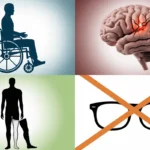
- paraplegia or tetraplegia (spinal cord injury meeting defined standards),
- qualifying amputations or permanent loss of use,
- total loss of vision in both eyes (meeting criteria),
- traumatic brain injury criteria (adult and child pathways),
- 55% or more whole person impairment (WPI) under the required methodology and timing rules,
- marked or extreme mental or behavioral impairment criteria (with defined testing and thresholds).
A simple real-world example: two people can both have “serious” injuries, but only one may qualify as catastrophic under the criteria. That difference can change the available support in a major way.
How Do the SABS Criteria Determine Catastrophic Status?
The process is structured. Your insurer is not deciding based on how hard your life feels right now, they decide based on medical documentation and whether the criteria are met.
In most cases, the pathway looks like this:
- Medical records and functional evidence are gathered
Hospital records, imaging, specialist reports, rehab notes, neuropsychic testing, and documentation of daily limitations. - A catastrophic determination application is submitted
This is where your providers link your impairment to the exact SABS criteria. - The insurer reviews and may dispute
Higher-stakes files are more likely to be challenged because of the cost difference in benefits. - If disputed, independent assessments and dispute steps may follow
This can take months, especially where criteria depend on time-based outcomes or prognosis evidence.
The key point is this: catastrophic designation is won on evidence quality, criterion fit, and timing, not on how strongly you argue that your injury is severe.
What Injuries Are Typically Catastrophic vs Non-Catastrophic?
Here is the practical comparison most people are really asking for when they search catastrophic vs non catastrophic injury.
Some injuries commonly align with catastrophic criteria because they create permanent, measurable functional loss. Others can be very painful and disruptive, but do not usually meet the catastrophic thresholds unless complications or permanent deficits develop.
| Injury type | More commonly catastrophic (depending on criteria) | More commonly non-catastrophic (case-specific) |
|---|---|---|
| Spinal cord injury | Paraplegia/tetraplegia, severe mobility impairment | Disc injuries, serious back pain with improvement potential |
| Brain injury | Severe TBI meeting outcome and imaging criteria | Concussion with steady recovery and improving function |
| Limb loss | Qualifying amputations or permanent loss of use | Fractures that heal with rehab, even if slow |
| Vision | Total loss of vision in both eyes meeting thresholds | Partial loss or single-eye issues |
| Mental/behavioral | Marked or extreme impairment meeting the defined test | Anxiety, depression, PTSD that does not reach catastrophic thresholds |
How Do Benefit Limits Differ Between Catastrophic and Non-Catastrophic Claims?
If you are worried about funding running out, you are thinking about the right issue. Benefit limits are one of the biggest reasons catastrophic status matters in Ontario.
For accidents on or after June 1, 2016, the standard combined limit for medical, rehabilitation, and attendant care is commonly:
- Non-catastrophic: up to $65,000, and the attendant care monthly cap is $3,000
- Catastrophic impairment: up to $1,000,000, and the attendant care monthly cap is $6,000
Here is the simple comparison:
| Category | Combined med/rehab/attendant care | Attendant care monthly cap |
|---|---|---|
| Non-catastrophic | $65,000 | $3,000 |
| Catastrophic impairment | $1,000,000 | $6,000 |
Optional coverage can increase these limits, for example increasing non-cat coverage to $130,000 and catastrophic coverage to $2,000,000, depending on your policy choices.
This is what people mean when they talk about catastrophic designation benefits. In real life, it can decide whether you can afford the level of rehab, support work, home modifications, and long-term care your situation actually requires.
Does Catastrophic Designation Increase Settlement Value in Tort Claims?
It can, but not because the label itself adds money automatically.
Catastrophic cases often have higher value because they usually involve:
- higher future care costs,
- higher income loss and reduced earning capacity,
- stronger evidence of permanent impairment,
- and more intensive expert involvement (medical, rehab, vocational, economic).
In Ontario motor vehicle cases, tort claims for pain and suffering and related damages can also involve legal threshold tests and other limitations. The practical takeaway is this: catastrophic-level impairments often create the kind of long-term impact that drives higher damages, but every case still depends on liability, proof, and documentation.
When care needs are long-term (supervision, mobility support, ongoing therapy), the case valuation changes because the claim is not about “recovery in months,” it is about “support for years.”
What Is the Catastrophic Impairment Assessment Process?
You might be unsure where you even start, so let me make this simple and practical.
The catastrophic assessment process is about proving a match between your impairment and the SABS criteria, with the right evidence at the right time.
Typical steps:
- Document the injury properly from day one (hospital records, imaging, specialists, rehab progress).
- Track function, not only symptoms (mobility, cognition, self-care ability, supervision needs).
- Complete the catastrophic determination application with your providers supporting the criterion fit.
- Respond quickly to insurer requests and keep everything in writing.
- If disputed, prepare for independent assessments and dispute steps, using the right experts for the right criterion.
One pattern I see too often: people focus on short-term treatment approvals, then realize late that their evidence does not clearly support the catastrophic pathway. That is usually fixable, but it is harder when you are already close to benefit caps.
If you want a clear answer on whether your case may qualify and what evidence is missing, you can speak with Maana Law in Mississauga, ON for a free case review focused on SABS criteria and funding risks.

What Happens If Your Catastrophic Claim Is Denied?
A denial is common, and it does not always mean you do not qualify. It often means the insurer believes the evidence is incomplete, the criterion does not fit, or the timing is “too early” under the rules.
When a catastrophic claim is denied, the practical response is:
- Get the denial reasons clearly
You need the insurer’s medical and factual reasons, not vague language. - Identify the exact evidence gap
Is it missing testing, unclear functional documentation, wrong criterion selection, or lack of prognosis support? - Strengthen the file with targeted evidence
Specialist reports, updated functional assessments, neuropsychic testing, and clear linkage to the criterion. - Protect treatment continuity
If you are approaching non-cat funding limits, you need a strategy that avoids care disruption while the dispute is addressed.
Long-Term Care and Financial Planning for Catastrophic Injuries
When the injury is truly life-altering, your claim is not only about what happened. It becomes a planning exercise: how do you fund care, support independence, and protect your family’s financial stability?
Long-term planning typically includes:
- ongoing therapy and rehabilitation supports,
- attendant care needs and supervision planning,
- home and vehicle modifications,
- mobility aids and adaptive technology,
- future income loss and reduced earning capacity,
- and a structured plan for future care costs.
This is also where documentation matters even more. The better your care needs are assessed and recorded, the harder it is for an insurer to undervalue what your life now requires.
Why Choose Maana Law for Your Catastrophic or Personal Injury Claim in Mississauga?
Maana Law is a personal injury firm based in Mississauga, serving clients across the GTA, with a focus on motor vehicle collisions, catastrophic injuries, wrongful death, slip and fall injuries, and other serious injury claims.
What clients usually appreciate most about our approach:
- Client-focused case strategy: we explain the process in plain language and keep you informed.
- Evidence-driven preparation: serious injury claims rise or fall on documentation, expert support, and planning.
- Access-friendly service: virtual meetings are available, and home or hospital visits can be arranged when appropriate.
- Contingency fee structure: we work on a “No Win, No Fee” model, with transparency on how fees work.
Frequently Asked Questions
What is an example of a catastrophic injury?
In Ontario auto claims, examples often include paraplegia or tetraplegia, severe traumatic brain injury meeting SABS criteria, qualifying amputations, or total loss of vision in both eyes.
How much do most personal injury cases settle for in Ontario?
There is no standard amount. Settlement value depends on liability, medical proof, long-term impairment, future care costs, and income loss.
What are the 3 levels of injury severity in Ontario auto claims?
They are commonly discussed as Minor Injury Guideline (MIG), non-catastrophic impairment, and catastrophic impairment, with different benefit limits.
What makes a claim catastrophic under SABS?
It becomes catastrophic when your impairment meets a defined SABS criterion, supported by medical and functional evidence, not simply because the injury feels severe.
How do I get my injury assessed as catastrophic?
You need medical documentation and functional assessments that match a specific SABS criterion, followed by a catastrophic determination application and insurer review.
Conclusion
The key point is simple: in Ontario, “personal injury” is the broad category, but “catastrophic impairment” is a specific SABS designation that can significantly affect your accident benefits, care planning options, and long-term financial recovery.
If your injuries are serious, you cannot afford to be classified too low too early. The right medical documentation and a clear assessment strategy help protect your access to treatment and the supports you may need moving forward, before benefit limits become a problem.
Speak with Maana Law in Mississauga, ON today for a free consultation. Call 437-979-4878, email info@maanalaw.com