

Yes, you can protect your legal rights after a catastrophic accident, but the first few decisions have to happen in the right order.
If you are trying to figure out what to do after a severe accident, you are probably balancing two urgent realities at once: your medical situation and the insurance and legal system that starts moving immediately. Catastrophic injuries often involve traumatic brain injury, spinal cord injury, major amputations, or severe impairment that changes work, independence, and day-to-day life.
Ontario road trauma is not rare. For example, the Ontario Provincial Police reported 382 deaths on OPP-patrolled roads in 2024, tied to 344 fatal collisions. That does not count every road in Ontario, but it shows how quickly “normal life” can turn into a life-altering file with insurers, hospitals, and benefits forms.
At a practical level, your early priorities should be:
- stabilize health and create a clean treatment record
- preserve evidence before it disappears
- start accident benefits paperwork without missing key time limits
- avoid early insurer pressure that can lock you into the wrong story too soon
- prepare for the catastrophic impairment process if your injuries may qualify under SABS
Below, I’ll walk you through the exact step-by-step sequence we advise in real catastrophic cases, without fluff, and without breaking the structure you need to follow under Ontario’s system. To understand how these cases differ from standard claims, you can learn about catastrophic injury vs personal injury to see the legal distinctions.
What Counts as a Catastrophic Accident or Injury in Ontario?
In Ontario, “catastrophic” is not just a description of how serious the accident feels. The key issue is whether your injuries may meet the catastrophic impairment threshold under the Statutory Accident Benefits Schedule (SABS), because that affects access to higher accident benefits and long-term supports.
In plain terms, catastrophic cases often involve things like paraplegia, tetraplegia, severe brain trauma, major amputations, or full vision loss. The exact determination is technical, but the takeaway is simple: if the injury is life-altering, treat the case as potentially catastrophic from day one. If you are unsure of your standing, consulting a Personal Injury Lawyer Mississauga can help clarify your specific situation.
| Category | Real-life examples |
|---|---|
| Spinal cord injury | Paraplegia, tetraplegia, loss of use of limbs |
| Severe brain injury | Major cognitive changes, inability to self-manage or return to work |
| Amputation | Major limb loss or permanent loss of functional use |
| Vision loss | Total loss of vision in both eyes |
Why Acting Quickly After a Catastrophic Accident Matters for Your Rights
If you are thinking, “I’ll deal with paperwork later,” this is where delays quietly cause damage. Navigating catastrophic injuries Mississauga rights compensation requires immediate action to ensure your future is protected.
Ontario accident benefits start with strict timing expectations. The OCF-1 states you should tell your insurer within 7 days of the accident that you plan to apply for benefits, or as soon as possible if you cannot. The same document also states the application must be returned within 30 days after receipt, or submitted with an explanation for delay.
There are also system changes coming that make early clarity even more important. FSRA states that as of July 1, 2026, medical, rehabilitation, and attendant care benefits remain mandatory, while other accident benefits coverage becomes optional.
The fast summary is this: the earlier your file is organized, the harder it is for an insurer to minimize the severity, deny needs, or push you toward a premature outcome.
Step 1 – Prioritize Your Health: Seek Immediate Medical Attention
Your first priority is medical stabilization. Everything else is secondary.
Get emergency care, follow specialist instructions, and keep follow-up appointments. In catastrophic cases, gaps in care can later be used to argue your condition is improving or not as serious as claimed.
A simple checklist that keeps things clean:
- Get emergency care immediately
- Follow discharge instructions exactly
- Attend follow-up appointments consistently
- Ask for copies of key records when possible (or have family request them)
Step 2 – Preserve Evidence While in the Hospital or Acute Phase
If you are hospitalized, your family can protect your case while you focus on treatment.
This is where catastrophic injury documentation either becomes strong and organized, or scattered and incomplete. Your goal is to preserve what happened, and to show how your condition and limitations are developing in real time.
Have someone you trust collect:
- photos and videos of the scene, vehicles, hazards, equipment, and visible injuries
- witness names and contact information
- incident reports (police, workplace, property management)
- a short written timeline of events and early symptoms
- towing, repair, property damage, and any related receipts
One common problem we see is evidence disappearing within days, especially in workplace and property cases where conditions change quickly.
Step 3 – Report the Accident and File for Accident Benefits Promptly
This step is where many families lose time simply because they are overwhelmed, and the paperwork feels endless.
In Ontario, the OCF-1 is the Application for Accident Benefits. The form instructions are clear on two timing points people often miss:
- notify the insurer within 7 days that you plan to apply, or as soon as possible if you cannot
- return the application within 30 days after receipt, or submit it with a reason for delay
Step 4 – Understand and Apply for Catastrophic Impairment Designation
This is where the file shifts from “serious injury” to “catastrophic impairment,” and that difference affects support and long-term planning. It is vital to understand the catastrophic injury compensation Ontario limits to ensure you apply for the correct tier of funding.
The OCF-19 is the Application for Determination of Catastrophic Impairment, used to request a catastrophic designation through the accident benefits process.
Why it matters: FSRA’s consumer guidance explains that medical, rehabilitation, and attendant care benefits can be increased, including options that increase catastrophic coverage up to $2,000,000 depending on what coverage was purchased.
| Benefit planning level | What it usually affects |
|---|---|
| Non-catastrophic planning | Lower limits, tighter treatment funding decisions |
| Catastrophic planning | Larger funding availability and more realistic long-term care planning |
Step 5 – Avoid Early Settlements and Insurer Traps
If you’re feeling pressured to “wrap it up quickly,” you are not alone, and this is where the wrong move can cost you later.
The most common traps in catastrophic cases include:
- giving a recorded statement before the medical picture is clear
- accepting an early settlement offer before future care needs are understood
- delaying treatment or skipping appointments
- signing broad authorizations without understanding what they allow
- posting on social media in ways insurers can misinterpret
we see often: someone accepts an early offer because the immediate bills feel terrifying. Months later, when rehabilitation needs become clearer, the file is already boxed into an outcome that does not reflect long-term reality.
Step 6 – Involve a Catastrophic Injury Lawyer Early
This is the point where most people ask whether it is “too soon” to call a lawyer. In catastrophic cases, early involvement usually protects you, because evidence and documentation are still being built. Hiring a Catastrophic Injury Lawyer Mississauga ensures that your rights are shielded from the very beginning.
What early legal support actually does is practical:
- preserves evidence and organizes documents
- manages insurer communication so nothing is misframed
- coordinates with your treatment team so records match real limitations
- evaluates liability, negligence, and third-party claims
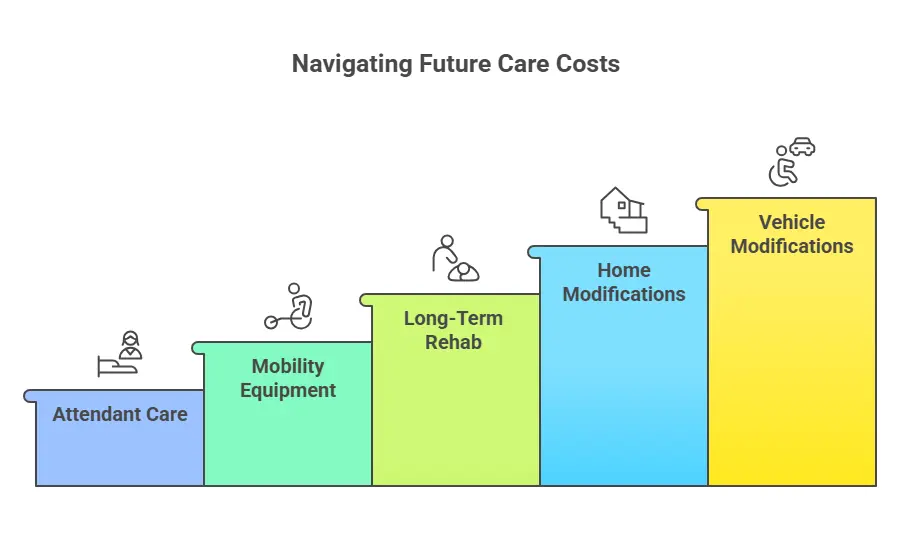
- plans damages like future medical costs, lost income, and reduced earning capacity
Why Choose Maana Law for Your Catastrophic Injury Claim in Mississauga
Catastrophic cases are not just legal files. They are long-term planning problems that involve treatment coordination, benefits paperwork, insurer pressure, and future financial stability.
Here is what we focus on:
Client-first access: virtual meetings, and home or hospital visits when mobility is limited
Clear communication: you get straight answers and regular updates, not legal fog
Serious case building: detailed review of reports, medical evidence, and liability facts
No Win, No Fee: aligned incentives, with an explanation you can understand up front
Local knowledge: we handle claims across Mississauga and the GTA, where insurer processes and treatment pathways are familiar
Frequently Asked Questions
How soon do I need to notify my insurer about accident benefits?
As a rule, the OCF-1 says you should notify your insurer within 7 days that you plan to apply, or as soon as possible if you cannot.
What if I miss the 30-day OCF-1 return timeline?
The OCF-1 says the application should be returned within 30 days after receipt, or submitted with an explanation for delay. If the delay is due to hospitalization or crisis, document the reason and submit as soon as possible.
What is the OCF-19 used for in catastrophic cases?
OCF-19 is the form used to apply for a determination of catastrophic impairment through the accident benefits process.
How much coverage can be available for medical, rehab, and attendant care?
FSRA explains there are options to increase medical, rehabilitation, and attendant care coverage, including increasing catastrophic coverage up to $2,000,000 depending on what was purchased.
Are accident benefits changing in 2026?
Yes. FSRA states that as of July 1, 2026, medical, rehabilitation, and attendant care benefits remain mandatory, while other accident benefits coverage becomes optional.
Conclusion
Catastrophic cases are usually decided by early structure, not late arguments.
Protect your treatment record by staying consistent with care. Preserve evidence while it is still available. Start the accident benefits process without missing key time limits. Treat the catastrophic designation as a process that needs proper medical support, not guesswork. These steps are the difference between a file that reflects reality and one that gets minimized.
FSRA has also confirmed broader SABS changes starting July 1, 2026, which can make coverage details more variable between policies. That makes early clarity even more important.
If you need help with protecting catastrophic injury claim value, deadlines, and documentation, contact Maana Law in Mississauga at 90 Matheson Blvd W Suite 101, Mississauga, ON L5R 3R3. Call 437-979-4878 or email info@maanalaw.com.