Have you ever wondered why motorcycle accidents in Ontario can be far more serious than car collisions? The answer lies in the physics of riding, the level of protection, and how insurers view riders. Even a minor crash can result in fractures, spinal injuries, or traumatic brain injuries because motorcycles offer almost no structural protection compared to cars.
Motorcycle riders face unique challenges on the road. Unlike car occupants, they are exposed to direct impact in collisions and are more likely to be ejected or slide on asphalt. Insurers may also assume motorcyclists were at fault, even when evidence proves otherwise. Ontario’s no-fault benefits provide immediate medical and income support, but understanding how claims, evidence, and long-term compensation work is critical to securing fair results.
In this blog, you will learn:
- How motorcycle accidents differ from car collisions in terms of injury severity and legal complexity.
- Why bias against motorcyclists can affect insurance settlements and how to counter it.
- The key pieces of evidence needed to prove a motorcycle accident claim.
- How no-fault and accident benefits work in Ontario.
- Why specialized motorcycle accident lawyers can maximize compensation.
- Time limits for filing claims and why missing them can be costly.
By the end of this article, you’ll have a clear understanding of why motorcycle accidents require specialized legal expertise, what factors influence your claim, and how riders can protect their rights and financial recovery after a crash.
Motorcycle crashes aren’t like car crashes. You need a lawyer who knows the difference.
Maana Law’s motorcycle accident team understands rider-specific injuries, bias issues, and evidence needs.
How Are Motorcycle Accidents Different from Car Accidents in Ontario?
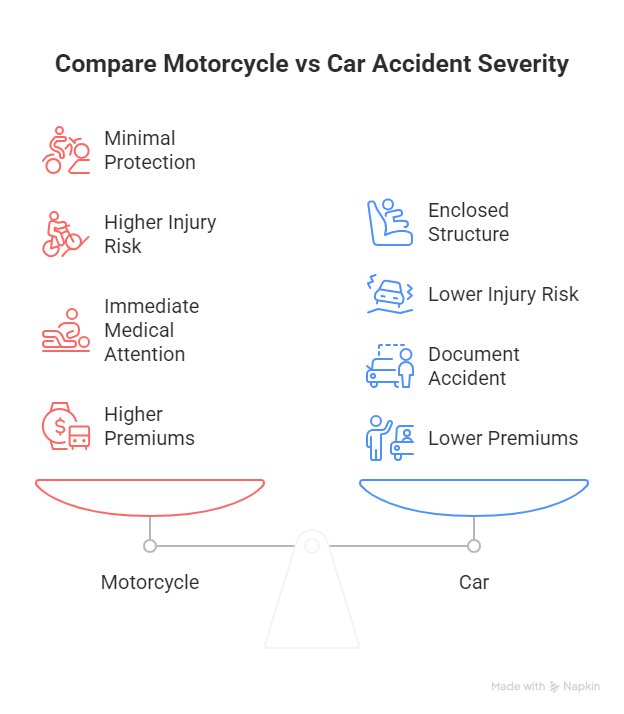
Motorcycle accidents generally result in higher injury severity, complex claims, and longer recovery times. The lack of a protective frame exposes riders to direct impact with the road or other vehicles. Car occupants benefit from structural protection, seatbelts, and airbags.
| Feature | Motorcycle | Car |
|---|---|---|
| Protection | Minimal, gear-dependent | Seatbelts, airbags, frame |
| Injury Risk | High; fractures, TBI, spinal injuries | Lower; whiplash, bruises |
| Legal First Steps | Accident reconstruction, medical documentation | Police report, insurance claim |
| Common Insurer View | Skepticism, often assumes fault | Standard claim handling |
According to the Traffic Injury Research Foundation, motorcyclists are 27 times more likely to be hospitalized per mile than car drivers in Canada (TIRF, 2023). This higher risk directly affects compensation expectations and legal strategies.
Physics and Protection: Why Motorcyclists Face Greater Risk
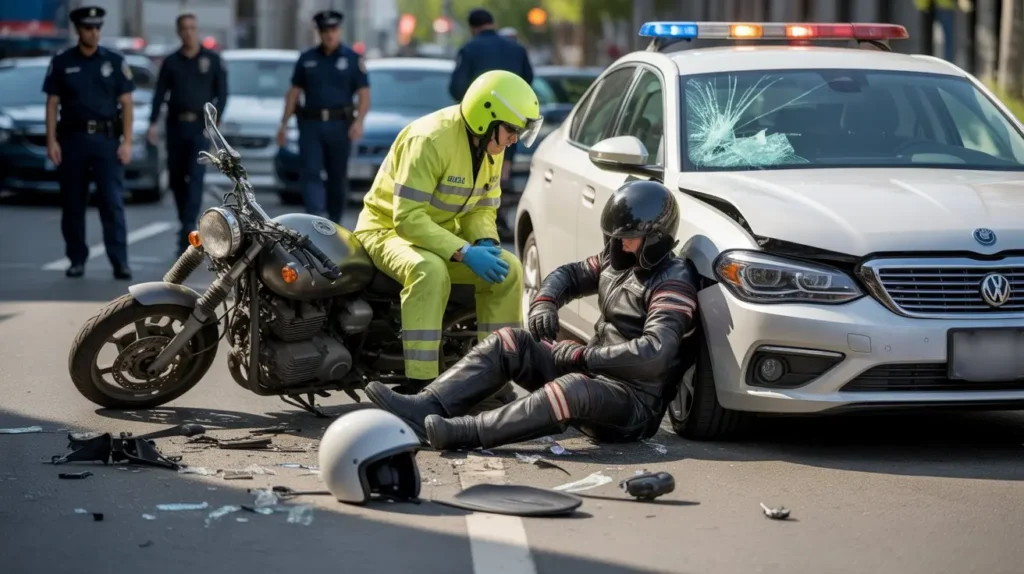
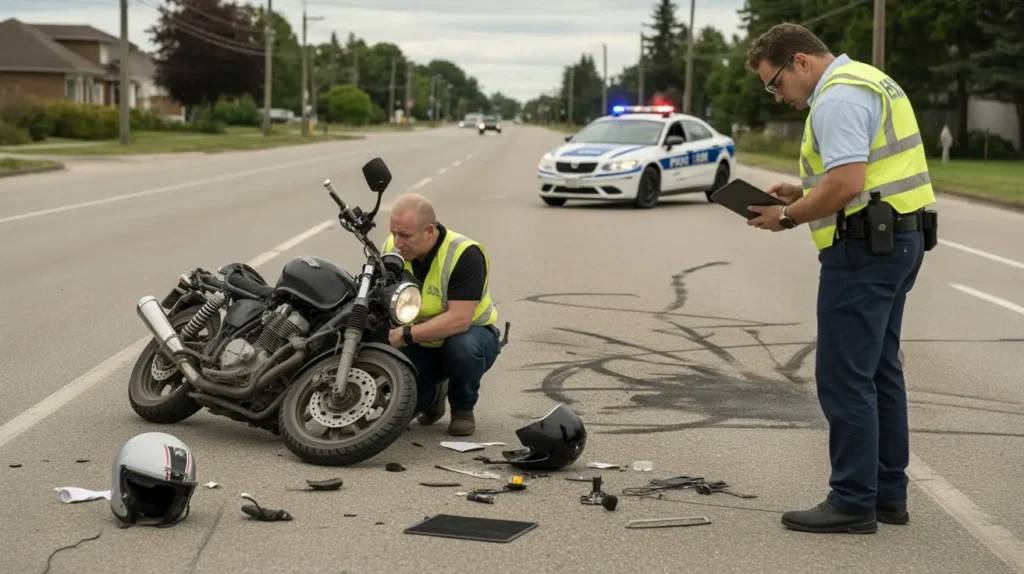
Motorcyclists experience forces differently due to no protective cabin. Even a moderate collision can eject a rider, resulting in contact with the road or other objects. A 50 km/h sideswipe might leave a car driver with minor bruising, while the rider could sustain spinal injuries, fractures, or head trauma.
Protective gear mitigates some risk but cannot fully replace a vehicle’s structural safety. Legal claims must account for the physics of motorcycle crashes when calculating damages and negotiating compensation.
Injury Patterns Unique to Motorcycle Crashes
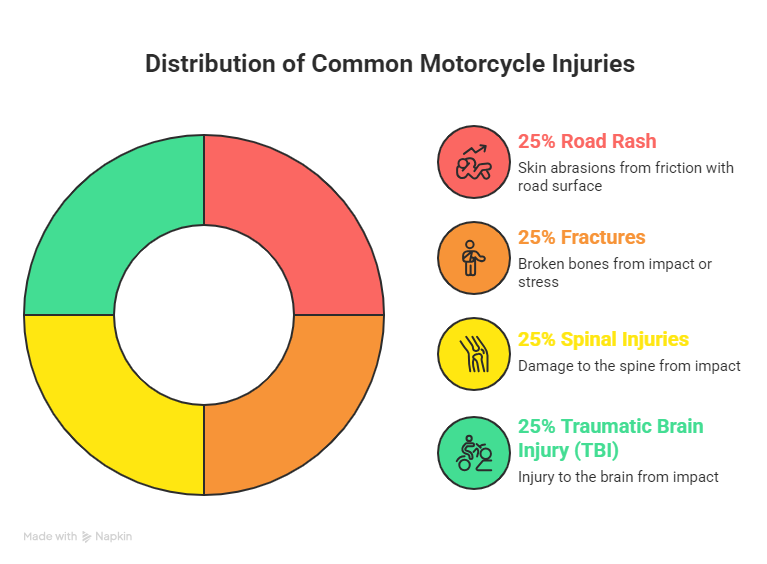
Motorcycle crashes frequently produce multiple injuries, including:
- Road rash from sliding on asphalt
- Spinal cord injuries affecting mobility
- Traumatic brain injuries despite helmets
- Fractures of arms, legs, and ribs
Research by the National Highway Traffic Safety Administration indicates motorcyclists are 28 times more likely to die in a crash per mile traveled than car occupants (NHTSA, 2022). These injury patterns require higher medical costs, extended rehabilitation, and long-term care, making specialized legal representation essential.
For example, a rider involved in a collision on a Toronto roadway may require months of physiotherapy, wheelchair assistance, and home care factors that influence the total claim value.
Insurers often blame the rider first. A specialized motorcycle lawyer can counter that bias.
Accident reconstruction, medical evidence, and expert testimony — we build the case insurers can’t ignore.
How Bias Against Motorcyclists Affects Your Claim in Ontario
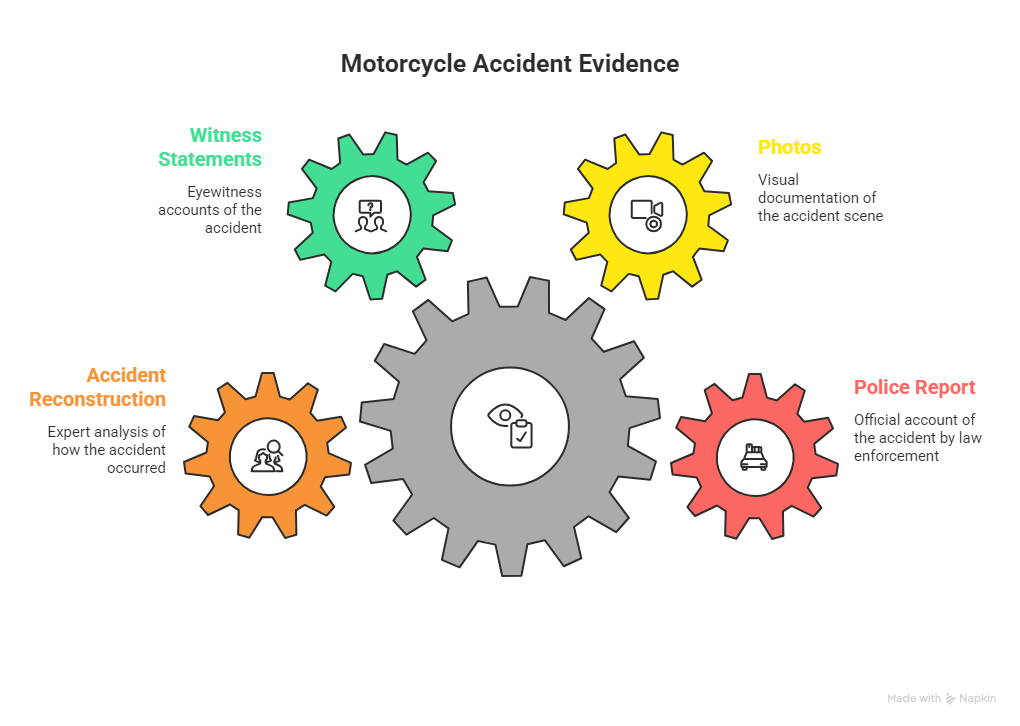
Insurers often presume riders were speeding or negligent, even when evidence suggests otherwise. This bias can reduce settlement offers or delay claim approval. Proving fault requires careful documentation, including witness statements, police reports, and accident reconstruction.
At Maana Law, we have successfully countered insurer assumptions, ensuring motorcycle accident settlement amounts reflect actual injuries rather than stereotypes. A case in Mississauga involved a rider initially denied a full claim due to alleged speeding; reconstruction data demonstrated the driver’s negligence, resulting in a fair settlement.
Evidence Challenges: Why Motorcycle Cases Are Harder to Prove
Motorcycle claims demand more detailed evidence than typical car accidents. Critical documentation includes:
- Police reports
- Photographs of the scene and injuries
- Witness statements
- Accident reconstruction analyses
Without these, insurers may undervalue claims or deny them entirely. For instance, a crash on a suburban Ontario street may appear straightforward, but reconstruction can show the other driver’s liability and impact on the rider’s injuries.
No-Fault Benefits and Accident Benefits: What Riders Must Know First
Ontario law provides accident benefits covering medical care, rehabilitation, income replacement, and attendant services, regardless of fault. Riders can access these benefits even if partially responsible.
However, full compensation for pain, suffering, permanent disabilities, or lost earning potential requires a personal injury claim. For example, a rider with multiple fractures may receive accident benefits for therapy but will need legal action to recover future income loss or long-term care costs (FSRA, 2023).
Valuation Gaps: Why a General Car Accident Lawyer May Undervalue Your Case
Lawyers without motorcycle-specific experience may underestimate claim value. Motorcycle accidents often involve:
- Catastrophic injuries
- Long-term medical care
- Permanent disability
- Emotional trauma
An anonymized Ontario case shows this clearly: an initial offer of $75,000 was increased to $425,000 after a lawyer evaluated long-term care needs, rehabilitation, and loss of earning potential. Specialist lawyers ensure settlements reflect the real cost of recovery.
Time Limits You Can’t Afford to Miss in Ontario
Ontario imposes strict deadlines for filing personal injury claims, usually two years from the accident date. Accident benefit claims and insurance notifications may have shorter timeframes. Missing deadlines can bar compensation, even if the other driver is clearly at fault.
Lawyers monitor these timelines carefully, ensuring riders do not lose the right to claim.
Why Choose Maana Law: A Specialized Motorcycle Accident Lawyer in Mississauga
Choosing the right lawyer can make a significant difference in the outcome of your motorcycle accident claim. At Maana Law, our Motorcycle Accident Lawyer Mississauga team focuses on understanding rider-specific injuries, insurance challenges, and Ontario’s legal processes to secure fair compensation efficiently and effectively.
Specialized Expertise : Decades of experience handling motorcycle accidents ensure accurate assessment and strong representation.
Proven Track Record : Millions secured in settlements and verdicts for injured riders across Ontario.
Personalized Support :One-on-one guidance with tailored strategies for your case.
Accessibility & Convenience : Free consultations, virtual meetings, and home/hospital visits for injured clients.
No Win, No Fee Policy : Risk-free legal support so you can focus on recovery, not costs.
Frequently Asked Questions
Is a motorcycle accident lawyer different from a car accident lawyer in Ontario?
Yes. They focus on rider-specific injuries, insurance challenges, and accident reconstruction, unlike general car accident lawyers.
Why do motorcycle accidents cause more serious injuries than car crashes?
Motorcyclists have little protection, making them more prone to fractures, spinal injuries, and road rash.
How does bias against motorcyclists affect insurance settlements?
Insurers may assume riders are at fault, lowering offers. Proper evidence can counter this.
Do I still get accident benefits if the other driver was at fault?
Yes. Ontario’s no-fault benefits cover medical costs and income replacement regardless of fault.
What evidence is most important in a motorcycle accident claim?
Police reports, medical records, photos, witness statements, and accident reconstruction are key.
Injured in a motorcycle accident? Get a specialized lawyer — not a generalist.
Maana Law handles motorcycle injury claims across Mississauga. Free consultation, no fees unless we win.
Conclusion
Motorcycle accidents involve higher risks, more severe injuries, and complex evidence requirements compared to car accidents. Bias against riders and insurance undervaluation further complicates claims. Ontario’s no-fault benefits provide initial support, but full recovery often requires specialized legal representation.
A lawyer experienced with motorcycle cases ensures proper documentation, fair settlement negotiation, and adherence to deadlines. Specialized expertise can significantly affect financial and personal recovery.
Don’t risk a lower settlement or missed deadlines. Contact Maana Law in Mississauga today for experienced motorcycle accident representation free consultation, No Win No Fee.