What can a rider realistically expect from a motorcycle accident settlement in Ontario? The answer depends on the severity of injuries, lost income, and the evidence supporting the claim, but understanding the general landscape can provide clarity and reduce stress after a crash.
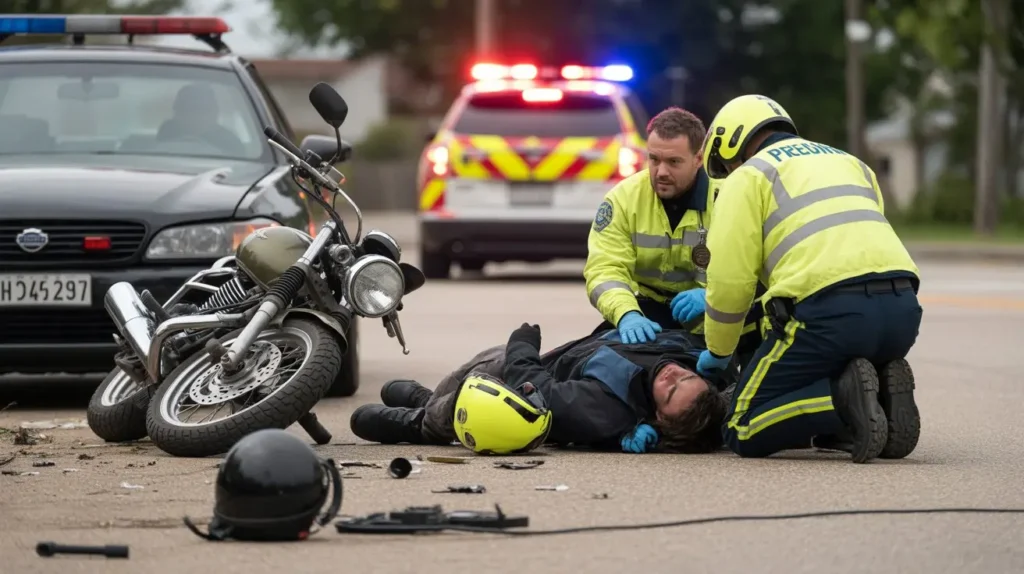
Motorcycle accidents often result in more serious injuries than car collisions because riders have less physical protection. This means medical bills, rehabilitation costs, and non-economic losses such as pain and suffering are typically higher. Ontario law allows accident victims to claim no-fault auto insurance benefits immediately and pursue tort claims for additional compensation when another party is at fault. Knowing how settlements are calculated, what evidence strengthens a claim, and the timelines involved can help riders protect their financial and personal recovery.
In this blog, you will learn:
- Motorcycle lawyer vs car lawyer settlement value differences
- Typical settlement ranges for different types of injuries, from road rash to catastrophic impairments
- How helmet use and partial fault affect compensation
- How lost income and future care costs are calculated
- Evidence and documentation required to maximize your claim
- What to expect during negotiations and how long the process usually takes
By reading this guide, you will have a clear understanding of what factors determine settlement amounts and how to approach your claim confidently. Even if you’re facing serious injuries or complex insurance negotiations, knowing these details can help you make informed decisions for your recovery and financial future.
Motorcycle injuries are more severe — your settlement should reflect that. Let us fight for you.
From road rash to spinal cord injuries, our Mississauga lawyers know how to value motorcycle claims properly.
Why Motorcycle Accident Settlements in Ontario Often Pay More Than Car Accidents
Motorcycle settlements are typically higher because riders lack the physical protection that cars provide. Unlike vehicles, motorcycles offer no cabin, airbags, or reinforced structure, making injuries more severe when a collision occurs. This exposure increases medical costs, rehabilitation needs, and the potential for permanent impairment.
For example, a rider involved in a side-impact collision is more likely to suffer fractures, soft tissue injuries, and road rash than a car passenger. These injuries contribute to higher non-economic damages for pain and suffering. Maana Law regularly observes higher settlement values for motorcycle cases because of the increased risk and long-term impact on victims’ lives.
Insurance adjusters also recognize the severity of these injuries. While minor car accidents might be resolved with small payouts, motorcycles often require comprehensive compensation due to the intensity of physical and financial loss. Studies show that motorcycle crashes result in hospitalization rates up to 10 times higher than car accidents in Canada (source: Transport Canada Crash Data).
Average Motorcycle Accident Settlement Amount in Ontario
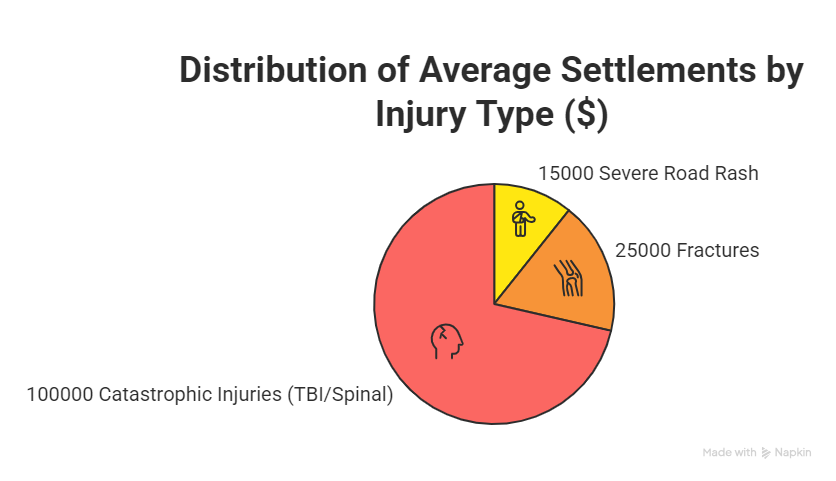
Settlement amounts vary depending on injury type and financial impact. Non-catastrophic injuries such as minor fractures or soft tissue damage generally settle in the $50,000–$200,000 range. Catastrophic injuries, including traumatic brain injuries (TBI) or spinal cord damage, may reach $500,000 to several million dollars, depending on care requirements and income loss.
No single “average” exists because each case depends on the victim’s age, occupation, severity of injuries, and evidence provided. For example, a 40-year-old rider with multiple fractures and weeks of lost wages may settle between $150,000 and $280,000. Data from the Ontario Road Safety Annual Report highlights that serious motorcycle injuries consistently generate higher compensation due to increased medical and rehabilitation costs.
Compensation by Injury Type
Injuries dictate settlement value. Ontario considers both economic losses (medical bills, lost wages, future care) and non-economic losses (pain, suffering, reduced quality of life). The following ranges provide guidance:
| Injury Type | Typical Non-Economic Range | Total Potential (including economic) | Notes |
| Severe road rash | $40,000–$120,000 | $80,000–$250,000 | Scarring, infection risk |
| Fractures (surgical) | $60,000–$180,000 | $150,000–$400,000+ | Lost work, rehabilitation |
| Catastrophic (TBI/spinal) | Uncapped | $500,000–$3,000,000+ | Future care, income loss |
Maana Law has helped riders secure six-figure settlements for injuries in these categories. For instance, a 32-year-old rider with a fractured femur requiring surgery and months of physiotherapy received $180,000, covering both lost income and future rehabilitation.
Insurance lowballing your motorcycle claim? Don’t accept the first offer.
Lost income, future care, and pain & suffering add up fast. Let Maana Law calculate the true value of your claim.
Effect of Helmet Use on Settlement
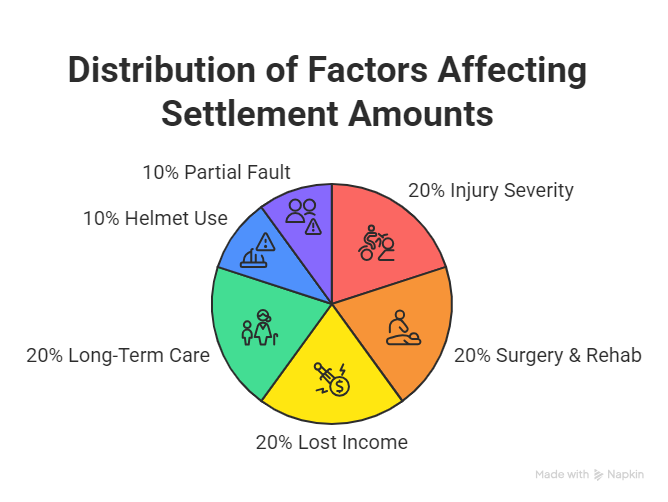
Ontario law accounts for contributory negligence, which can reduce settlements if a rider did not wear a helmet. Courts may reduce damages by 10–30% if the helmet’s absence directly contributed to injury severity. The exact reduction depends on causation and evidence provided.
For example, if a head injury worsened due to not wearing a helmet, the settlement could be reduced. Injuries unrelated to head protection, such as fractured limbs, remain fully compensable. Strong documentation, expert testimony, and clear accident reports can limit reductions (Ontario Ministry of Transportation).
Lost Income Calculation
Lost income includes both past wages and future earning potential. Ontario law considers pre-accident earnings, time off work, and permanent functional limitations. Documentation is critical tax records, pay stubs, and employer statements support claims.
For example, a self-employed rider earning $80,000 annually who must reduce work hours may claim proportional future income loss. Seasonal or commission-based earnings, common among riders, are also factored into compensation. Using a multiplier formula (pre-accident earnings × months lost × impact factor) helps quantify claims accurately.
Low-Ball Insurance Offers and Negotiation
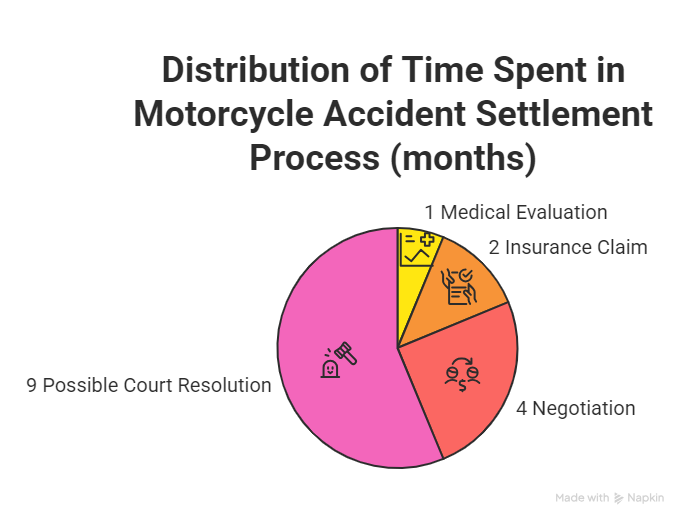
Insurance companies often begin with low-ball offers that underestimate future care, rehabilitation, and lost income. Negotiation involves multiple stages: initial offer, mediation, pre-trial discussions, and, if necessary, court proceedings. Riders can present strong documentation to justify higher settlement values.
For example, Maana Law reviews initial offers to determine if adjustments are needed based on actual medical costs and projected income loss.
Evidence to Maximize Compensation
Evidence is crucial for supporting claims:
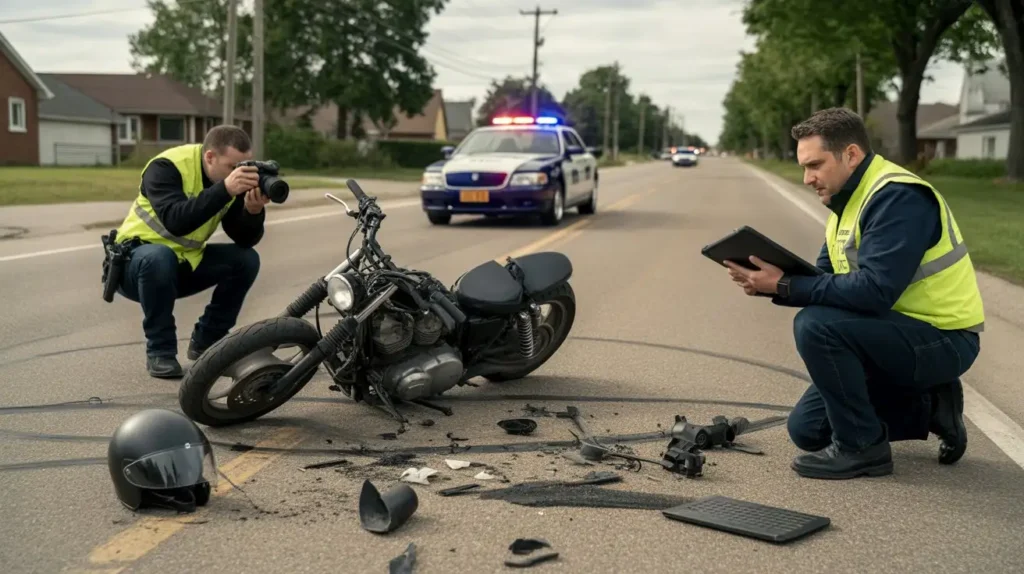
- Police and accident reports
- Medical records and imaging
- Scene photographs
- Witness statements
- Employment verification
- Receipts for medical expenses and rehabilitation
- Expert testimony on future care needs
Providing comprehensive documentation strengthens settlements. For instance, a rider with detailed physiotherapy records and expert evaluation of long-term care needs will likely secure higher compensation.
Timeline for Motorcycle Accident Settlements
Ontario settlements usually take 12–36 months. Factors influencing timelines include injury stabilization, severity, and liability disputes. Simple fractures may resolve in 12–18 months, while brain injuries or complex spinal cases could require 2–3 years to settle.
Partial Fault and Comparative Negligence
Ontario law allows claims even if the rider shares some fault. The settlement is reduced proportionally. For instance, a $200,000 claim with 20% rider fault results in $160,000. Clear documentation of accident circumstances supports fair fault allocation.
Long-Term Care Costs
Catastrophic injuries often require lifelong care. Settlement calculations include:
- Physical therapy
- Home care and adaptive equipment
- Assistance with daily living
- Income loss due to inability to work
Statistics from Canada indicate that long-term care expenses for severe injuries significantly increase claim value (Statistics Canada).
Factors Increasing Settlement Amounts
Higher settlement values occur when injuries result in:
- Major surgery and extended rehabilitation
- Permanent functional loss
- Significant lost income
- Ongoing lifestyle and care needs
Claims assess these factors collectively. Multiple severe injuries with income disruption lead to larger settlements than a single, minor injury.
Statute of Limitations
Tort claims in Ontario must generally be filed within 2 years of the accident date. Missing this deadline may prevent compensation, making prompt legal action essential.
Misunderstandings About Settlements
Common misconceptions include:
- All motorcycle claims pay a standard amount
- Not wearing a helmet automatically reduces all damages
- Quick settlement offers reflect full value
Each case is unique and depends on injury severity, evidence, and financial impact.
Why Choose Maana Law
After a motorcycle accident, having the right legal support can make all the difference.Maana Law’s motorcycle accident lawyers Mississauga provide dedicated guidance, personalized care, and expert advocacy to ensure you receive the compensation you deserve. Here’s why clients trust us:
No Win, No Fee Policy : You pay nothing unless we secure a settlement or verdict.
Expertise in Personal Injury Law : Over a decade of experience handling motorcycle accidents in Ontario.
Comprehensive Case Support – From medical reports to witness statements, we handle all documentation.
Accessible Consultations : Virtual, home, and hospital visits make legal advice convenient.
Proven Track Record : Millions recovered for clients, backed by 5-star Google reviews and satisfied victims.
Frequently Asked Questions About Motorcycle Accident Settlements in Ontario
What Is the Average Motorcycle Accident Settlement in Ontario?
Settlements vary widely. Non-catastrophic injuries often range from $50,000–$200,000, while catastrophic injuries can exceed $500,000 to several million, depending on medical costs, lost income, and pain and suffering.
Why Are Motorcycle Settlements Higher Than Car Accident Claims?
Motorcyclists have less protection, so injuries tend to be more severe. This increases medical, rehabilitation, and non-economic damages, leading to higher settlement amounts.
How Much Is Pain and Suffering Worth After a Motorcycle Crash?
Pain and suffering is calculated based on injury severity, recovery time, and lifestyle impact. Minor injuries may yield tens of thousands, while severe impairments can result in hundreds of thousands or more.
Does Not Wearing a Helmet Lower My Settlement Amount?
Yes, courts can reduce compensation by 10–30% if injuries could have been prevented by helmet use, depending on causation and evidence.
Can I Get Compensation If I Was Partially at Fault?
Yes, Ontario allows partial fault claims. Your settlement may be reduced proportionally to your share of responsibility.
Recovering from a motorcycle crash? Focus on healing — we’ll handle the legal battle.
Free consultation with Mississauga’s motorcycle accident specialists. No win, no fee — guaranteed.
Conclusion
Motorcycle accident settlements in Ontario reflect injury severity, lost income, long-term care needs, and evidence quality. Minor injuries may settle in the mid five-figure range, while catastrophic injuries often exceed $1,000,000. Proper documentation and expert testimony are critical for fair compensation. Settlement offers should be reviewed carefully, especially if they fail to account for long-term medical and lifestyle costs.
Don’t let the insurance company undervalue your recovery. Contact Maana Law today for a free, no-obligation consultation on your motorcycle accident settlement in Ontario. You pay nothing unless we win.