
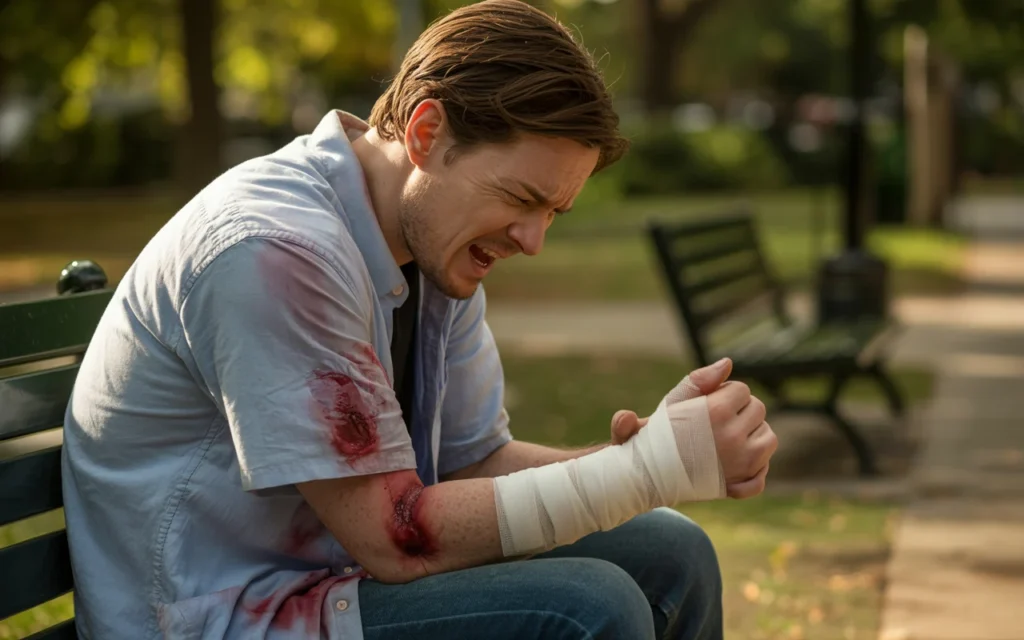
A dog bite can be a traumatic experience, leading to both physical and emotional consequences. In Ontario, the aftermath of a dog bite injury can be overwhelming, and one of the most common concerns for victims is how much compensation they can expect. If you’ve suffered from a dog bite, understanding legal responsibility dog owners Ontario can be crucial in helping you recover from the incident. This article will break down the key factors that influence the value of your dog bite injury claim in Ontario, including medical costs, emotional distress, and long-term impacts.
Wondering what your dog bite claim is worth? Get a free estimate from our legal team.
Dog bite settlements in Ontario range from $10K to over $500K depending on severity. Every case is unique.
How Much Can You Expect to Settle for in a Dog Bite Case in Ontario?
Dog bite settlements in Ontario typically range from $10,000 to $30,000 for minor injuries, while moderate to severe cases with permanent scarring, psychological trauma, or high medical costs often settle for $50,000 to over $100,000. Major, life-altering attacks can exceed $500,000, generally covered by homeowner’s insurance. If you’ve been the victim of a dog bite in Ontario, one of your primary concerns is likely the compensation you can receive for your injuries. The settlement amount in a dog bite case can vary significantly depending on several factors, including the severity of your injury, the location of the bite, and the potential long-term consequences, such as permanent scarring, psychological trauma, or the risk of infection.
Ontario’s Dog Owners’ Liability Act holds dog owners strictly liable for any injuries caused by their dogs, meaning that as the victim, you may be entitled to compensation for not only your medical bills but also for pain and suffering, emotional distress, lost income, and future rehabilitation costs. But how much can you actually expect to recover in a dog bite settlement? The answer lies in assessing the severity of your injuries, whether the dog was known to be dangerous, and whether the dog owner was negligent.
For instance, if you sustained permanent disfigurement or emotional distress, you could be entitled to a higher settlement. If the dog attack occurred in a public space or was particularly aggressive, the value of the case could be further influenced. Additionally, if the dog owner doesn’t have insurance or if the attack involved a child, the settlement value could also differ. Understanding these factors and knowing what they mean for your case will give you a clearer idea of what to expect when pursuing a dog bite lawsuit payout in Ontario.
Introduction: Navigating Dog Bite Claims in Ontario
Dog bites are a growing concern across Canada, with thousands of incidents reported each year. In Ontario, these attacks, and knowing tips for preventing dog bite injuries, are a major concern for victims navigating the recovery process. While the physical injuries from a dog bite are often visible, ranging from minor puncture wounds to severe disfigurement the emotional toll can be just as impactful, especially for those who suffer from Post-Traumatic Stress Disorder (PTSD) or anxiety related to animals.
Understanding the full extent of your rights and what you can expect from a dog bite settlement in Ontario is crucial for navigating this complex process. This guide is designed to help you better understand the steps involved in filing a dog bite injury claim, from seeking medical treatment to understanding the legal framework under which these cases are processed.
The Growing Concern of Dog Bites and Animal Attacks in Canada
Dog bites are a significant public safety issue in Canada, with a rise in reported cases in recent years. These attacks can occur anywhere such as public parks, urban areas, even private property. According to recent statistics, thousands of Canadians are injured by dogs every year, with many requiring emergency treatment, long-term rehabilitation, and sometimes even surgeries for scarring and disfigurement.
In Ontario, the Dog Owners’ Liability Act (DOLA) plays a crucial role in determining liability and ensuring victims are compensated fairly. However, while laws are in place to protect victims, the process of securing dog attack compensation in Canada can be complicated, requiring clear documentation, timely reporting, and legal expertise.
Understanding the Purpose of This Guide: Securing Fair Compensation
The purpose of this guide is to walk you through the essential steps of a dog bite lawsuit payout in Ontario, so you can secure the compensation you deserve. From understanding strict liability under the Dog Owners’ Liability Act to the various types of damages you may be entitled to, we aim to provide clarity and help you navigate the settlement process.
By the end of this guide, you’ll have a solid understanding of the legal framework, the compensation ranges based on injury severity, and how to ensure that your case is handled effectively. Whether you’re seeking compensation for medical expenses, pain and suffering, or lost wages, knowing your rights and options can make all the difference in securing a fair Ontario dog bite injury settlement.
Understanding Liability for Dog Bites in Ontario: The Legal Framework
In Ontario, the responsibility for dog bites is governed by the Dog Owners’ Liability Act (DOLA), which outlines the legal framework for holding dog owners accountable for injuries caused by their pets. This section will break down the key aspects of the law and explain how liability is determined in dog bite cases.
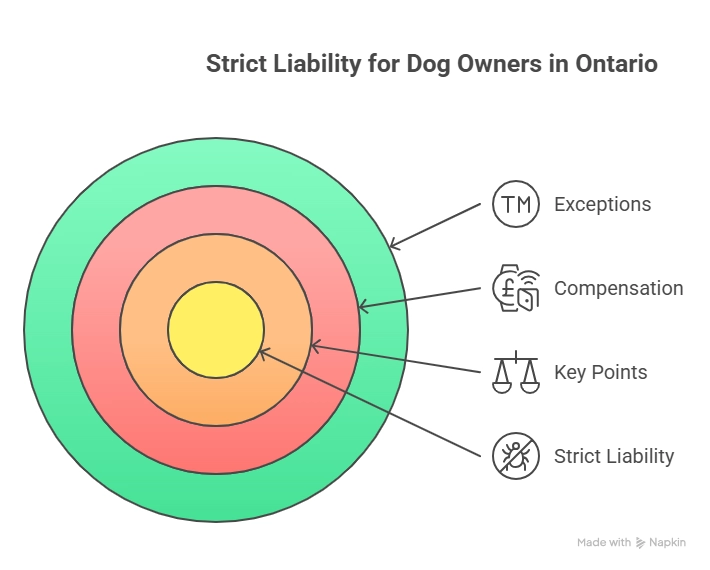
The Dog Owners’ Liability Act (DOLA): Strict Liability Explained
Under the Dog Owners’ Liability Act, Ontario operates on a principle of strict liability. This means that the owner of a dog is responsible for injuries caused by their dog, regardless of whether the dog has shown aggression in the past or whether the owner was negligent. If a dog bites or attacks someone, the dog owner is automatically held liable for any damages, including medical costs, pain and suffering, and lost wages.
The purpose of strict liability is to protect victims and ensure they receive compensation without the burden of proving the dog owner’s negligence. However, the law does have some exceptions, which can influence the outcome of a claim.
Who is an “Owner” Under DOLA? Implications for Dog Walkers and Others
Under DOLA, the definition of an “owner” is not limited to the person who legally owns the dog. The law extends to anyone who has control or possession of the dog at the time of the incident. This means that if someone else, like a dog walker, is in control of the dog during an attack, they may also be held responsible. The term owner includes:
- Dog walkers or anyone temporarily in charge of the dog.
- Dog sitters or anyone entrusted with the care of the dog.
If a dog bite occurs while the dog is under the care of someone other than the owner, that individual, as well as the actual owner, may face liability for the injuries caused. Understanding who is considered an “owner” can help victims determine who to hold responsible for the attack.
Shared Liability and Contributory Negligence: When Your Actions Matter
While strict liability means the dog owner is typically responsible, contributory negligence may also come into play. This refers to situations where the victim’s actions may have contributed to the incident. For example:
- Provoking the dog: If the victim taunted, teased, or otherwise provoked the dog, the owner may argue that the victim’s actions contributed to the attack, which could reduce the amount of compensation awarded.
- Trespassing on private property: If the victim was on private property without permission, the owner may argue that the victim was trespassing and therefore not entitled to full compensation.
However, contributory negligence does not automatically bar the victim from receiving compensation. The court will assess the situation and determine whether the victim’s actions were a significant factor in causing the attack.
Immediate Actions After a Dog Bite: Building a Strong Case
Taking the right steps immediately after a dog bite not only ensures your health and safety but also strengthens your case for compensation. The first few hours after the incident are crucial for both medical recovery and legal documentation. Here’s how you can build a strong case from the outset:
Prioritizing Medical Attention and Documentation
The first step after a dog bite is to seek medical attention, regardless of the severity of the injury. Even minor bites can lead to complications such as infection or rabies. When seeking treatment, ensure that:
- Medical records are created: Detailed documentation of your injuries will be essential for proving the extent of your damages.
- Photographs are taken: Ask your healthcare provider to take clear photos of the bite and surrounding area, as this visual evidence will be valuable when making your claim.
Prompt medical attention not only helps prevent complications but also creates a solid foundation for documenting the injury, which is crucial for your Ontario dog bite injury settlement.
Reporting the Incident to Authorities
In Ontario, it’s important to report the dog bite to the appropriate authorities. Reporting helps ensure that there is an official record of the attack and allows local agencies to assess the risk of further incidents. You should:
- Contact Peel Public Health to report the incident, especially if there are concerns about rabies exposure or other health risks.
- Inform animal control or Peel Regional Police if the dog was a known threat or if the attack occurred in a public space. Authorities may conduct an investigation and determine whether the dog is a repeat offender.
By notifying authorities, you help ensure that the dog owner is held accountable, and you create a vital paper trail for your case.
Gathering and Preserving Evidence at the Scene
Once you’ve received medical attention and reported the incident, it’s time to focus on collecting evidence to support your claim. Proper evidence-gathering is critical for building a strong case. Here’s what you should do:
- Take photographs of the injuries and the scene: Capture clear images of the bite and any other injuries, as well as the area where the attack occurred. Include any torn clothing or signs of struggle.
- Document dog details: Note the dog’s breed, size, color, and any identifiable marks. If possible, get the dog owner’s name, address, and phone number.
- Gather witness statements: If there were any witnesses to the attack, ask them to provide statements that describe what happened. Their testimony can support your account of the event.
The more evidence you gather, the stronger your case will be when negotiating your dog bite settlement in Ontario.
Types of Damages Recoverable in an Ontario Dog Bite Settlement
When you file a dog bite claim in Ontario, you may be entitled to recover different types of damages, depending on the severity of your injury and the impact it has had on your life. These damages can be categorized into economic and non-economic damages. Understanding these types of damages will help you better estimate the value of your claim and ensure you pursue all the compensation you deserve.
Economic Damages: Quantifying Financial Losses
Economic damages are designed to compensate for the financial losses that result from a dog bite injury. These include:
- Medical expenses: The cost of emergency treatment, hospital visits, doctor consultations, prescriptions, and rehabilitation therapies such as physiotherapy or plastic surgery.
- Lost wages: If your dog bite injury caused you to miss work, you can claim compensation for the income lost during your recovery period. This also includes future lost earnings if your injury affects your ability to work in the long term.
- Rehabilitation costs: Ongoing treatment for long-term effects, such as physiotherapy or additional surgeries, will also be covered under economic damages.
These financial losses are usually straightforward to calculate, as they are based on documented bills, receipts, and pay stubs. However, some expenses, like future lost income, may require expert testimony to accurately estimate.
Non-Economic Damages: Addressing Pain, Suffering, and Psychological Impact
In addition to economic damages, non-economic damages compensate for the intangible effects of a dog bite, which can be just as impactful as physical injuries. These damages address:
- Pain and suffering: Compensation for the physical pain you endured as a result of the bite, as well as the discomfort from treatments and surgeries.
- Emotional distress: A dog bite can leave victims with long-lasting psychological effects, including anxiety, depression, and PTSD. If the attack caused severe emotional trauma, you may be entitled to damages for emotional suffering.
- Loss of enjoyment of life: If your injury prevents you from participating in activities you once enjoyed, such as sports or hobbies, you may be compensated for the diminished quality of life.
- Permanent disfigurement or scarring: If the dog bite leaves permanent scars or affects your appearance, you may receive compensation for the emotional toll that comes with it.
While non-economic damages are more challenging to quantify, courts in Ontario use factors like the severity of the injury, the psychological impact, and the victim’s personal circumstances to determine an appropriate award.
Permanent scarring or PTSD from a dog attack? Your claim could be worth far more than you think.
Ontario’s Dog Owners’ Liability Act makes owners strictly liable. We ensure you’re compensated for every impact.
The Dog Bite Settlement Process: From Claim to Resolution
The process of securing a dog bite settlement in Ontario involves several steps, from filing your claim to negotiating a settlement or, in some cases, going to court. Understanding this process is essential for managing your expectations and ensuring that you receive the compensation you deserve. Here’s a breakdown of the key stages:
The Role of the Insurance Company in Dog Bite Claims
In many dog bite cases, homeowner’s insurance or pet insurance is the primary source of compensation. The dog owner’s insurance company will typically handle the claim and provide a settlement if the owner is found liable. The insurance company’s role includes:
- Evaluating liability: The insurer will investigate whether the dog owner is liable for the injuries based on the Dog Owners’ Liability Act and other relevant factors.
- Assessing damages: The insurance company will review your medical records, witness statements, and other evidence to calculate the financial and emotional damages you’ve suffered.
- Settlement offer: If the insurance company acknowledges liability, they may offer a settlement. Keep in mind that insurers often aim to minimize the payout, so it’s important to have experienced legal representation to ensure you receive fair compensation.
Building Your Case: Evidence, Medical Documentation, and Expert Opinions
A strong case for your dog bite lawsuit payout hinges on the evidence you present. Here’s what you’ll need to build a compelling claim:
- Medical documentation: This includes hospital records, doctor’s notes, and photographs of your injuries. Ensure all treatment is documented clearly, as this will substantiate your medical expenses and pain and suffering.
- Witness statements: If anyone witnessed the attack, their statements can corroborate your version of events and strengthen your case.
- Expert opinions: In some cases, you may need to consult medical or psychological experts to evaluate the long-term effects of the injury. For example, a plastic surgeon may need to assess scarring, or a psychologist could provide evidence of emotional distress caused by the attack.
Gathering all this information in advance ensures that you have a solid foundation for your claim.
Negotiation and Alternative Dispute Resolution (ADR)
Many dog bite cases are settled out of court through negotiation or Alternative Dispute Resolution (ADR) methods such as mediation or arbitration. These processes can be faster and less costly than going to trial. Here’s how ADR works:
- Mediation: A neutral third party helps both sides reach a mutually acceptable settlement. Mediation can be less adversarial and allows both parties to have more control over the outcome.
- Arbitration: A neutral arbitrator hears both sides of the case and makes a binding decision. This is more formal than mediation but still avoids the lengthy court process.
- Negotiation: Often, lawyers from both sides will negotiate directly with the insurance company to reach a settlement. The goal is to avoid going to court while still securing a fair payout for the victim.
ADR can be an effective way to settle a dog bite claim without the need for a lengthy trial, but it requires both sides to be willing to compromise.
Litigation and Court Proceedings: When a Settlement Cannot Be Reached
If negotiation or ADR fails, the next step may be filing a lawsuit and going to court. Litigation is often a lengthy and costly process, but it may be necessary if:
- The insurance company offers an insufficient settlement.
- The dog owner refuses to accept liability.
- The case involves significant damages that require judicial intervention.
During litigation, both sides will present evidence, and a judge or jury will decide the outcome. The court will consider the severity of the injury, the impact on the victim’s life, and the dog owner’s responsibility. If you win your case, the court will award compensation based on the damages.
The Crucial Role of an Ontario Dog Bite Injury Lawyer
Navigating the aftermath of a dog bite in Ontario can be overwhelming, especially when dealing with medical treatment, insurance companies, and potential legal action. An experienced dog bite injury lawyer plays a critical role in ensuring you secure the compensation you deserve. Here’s how a lawyer can assist you throughout the process:
Why Legal Advice is Essential for Dog Bite Settlements
Securing fair compensation for a dog bite injury can be a complicated process, and having legal guidance is essential for several reasons:
- Understanding your rights: A lawyer will ensure that you fully understand your legal rights under Ontario law, particularly the Dog Owners’ Liability Act. They will explain how strict liability works and how it impacts your case.
- Navigating the claims process: From filing paperwork to dealing with insurance companies, the claims process can be daunting. A lawyer will guide you through each step, ensuring you meet all deadlines and avoid common pitfalls.
- Maximizing your settlement: Legal advice helps ensure that you are pursuing the maximum compensation for your medical expenses, lost income, pain and suffering, and other damages.
Without a lawyer, you risk leaving money on the table or accepting an unfair settlement offer.
Strategic Evidence Gathering and Maximizing Damages
A key part of your lawyer’s job is to gather evidence and build a strong case for your claim. They will work with medical experts, gather witness statements, and compile all relevant documentation to support your case. This strategic approach to evidence-gathering helps:
- Strengthen your case: Properly documented injuries, medical records, and witness statements will make it more difficult for the dog owner or their insurance company to dispute your claim.
- Maximize your damages: Your lawyer will assess all aspects of your injury, including both economic and non-economic damages, to ensure that the settlement covers not just your immediate medical bills but also long-term care, pain and suffering, and emotional distress. They will also consider the severity of any scarring or permanent injury.
By presenting a well-documented case, your lawyer increases the chances of receiving a fair settlement.
Negotiating with Insurance Companies and Advocating for Your Rights
Insurance companies often aim to minimize payouts, even in legitimate cases. An experienced dog bite lawyer will be a strong advocate for your rights during negotiations. They will:
- Handle communication with the insurance company: Dealing with insurers can be frustrating, especially when they try to undervalue your claim. A lawyer will manage all communication with the insurance company, ensuring you don’t make any mistakes that could hurt your case.
- Advocate for fair compensation: Lawyers know the typical settlement ranges for different types of dog bite injuries and will fight to secure the compensation you deserve. If the insurance company offers an unfair settlement, your lawyer can take the matter to court.
- Negotiate effectively: With experience in settlement negotiation, a lawyer will use their knowledge to ensure you receive the best possible outcome. They can handle difficult situations, including when the dog owner doesn’t have insurance or when there are multiple parties involved.
In short, a lawyer ensures that you are not taken advantage of during the settlement process and will work tirelessly to advocate for your best interests.
Key Factors Influencing Your Dog Bite Settlement Value
The amount of compensation you can expect from a dog bite settlement in Ontario depends on several key factors. These factors determine the severity of your injuries and the long-term impact they will have on your life. Understanding these elements can help you better assess the value of your claim.
Severity and Nature of Dog Bite Injuries
The severity of the injuries sustained during a dog bite incident is one of the most significant factors influencing the settlement value. Dog bite injuries can vary from minor scrapes and bruises to severe lacerations, infections, and permanent disfigurement. The key considerations include:
- Permanent injury: If the bite leads to permanent scarring, disfigurement, or nerve damage, your settlement will likely be higher due to the long-term consequences of the injury.
- Facial injuries: Bites to the face or visible areas generally carry higher compensation amounts due to the potential for emotional distress and the cosmetic impact.
- Infection or medical complications: If the dog bite leads to infection risks such as rabies, tetanus, or other serious medical conditions, this will increase the value of your claim due to the additional treatments required.
- Psychological trauma: Beyond the physical injury, dog bites can lead to anxiety, PTSD, or a phobia of animals. These emotional impacts will also factor into the settlement, especially if professional counseling or therapy is needed.
The more severe and permanent the injury, the higher the settlement amount may be.
The Documented Impact on Your Life and Future
In addition to the physical injury, the way the dog bite affects your quality of life and future is another critical factor. For instance:
- Lost income: If you were unable to work due to the injury, the compensation would cover lost wages for the duration of your recovery. If the injury results in long-term disability or permanent impairment, the claim will also account for future lost earnings.
- Impact on daily activities: If your injury prevents you from engaging in regular activities, such as sports or hobbies, this can reduce your overall enjoyment of life. Compensation may also be awarded for this loss of enjoyment of life.
- Future medical care: If the injury requires ongoing treatment, such as physiotherapy, psychological counseling, or surgery, these future medical costs are typically included in the settlement amount.
The more profound the impact on your life, the higher the settlement value is likely to be, as the compensation should reflect both current and future losses.
Strength and Clarity of the Evidence Collected
The strength and clarity of the evidence you provide will play a significant role in determining the value of your claim. Key evidence includes:
- Medical documentation: Thorough and accurate medical records that show the extent of your injury, treatment, and recovery process are crucial for supporting your claim. Clear evidence of any scarring or ongoing medical needs will increase the settlement value.
- Witness statements: Eyewitness accounts that confirm the details of the dog bite can help corroborate your version of events. This can strengthen your case, particularly in instances where liability may be contested.
- Photographs of injuries and scene: High-quality photographs of the injuries immediately after the attack and throughout the healing process, as well as photos of the location where the bite occurred, provide strong visual evidence.
- Police and animal control reports: Official reports from authorities, including any police or animal control investigations, can serve as important documentation for your claim.
The clearer and more convincing the evidence, the more likely you are to secure a higher settlement. It also reduces the chances of disputes during the claims process.
Frequently Asked Questions
1. How much compensation can I expect from a dog bite settlement in Ontario?
Dog bite settlements in Ontario typically range from $10,000 to $30,000 for minor injuries. For moderate to severe cases with permanent scarring, psychological trauma, or high medical costs, settlements can range from $50,000 to over $100,000. Life-altering attacks may exceed $500,000, often covered by homeowner’s insurance.
2. What is the Dog Owners’ Liability Act (DOLA) and how does it affect my case?
The Dog Owners’ Liability Act (DOLA) holds dog owners strictly liable for injuries caused by their pets. This means that the owner is responsible for any damages, including medical bills, pain, and suffering, regardless of whether they were negligent. DOLA protects the victim from having to prove fault in most cases.
3. Can I get compensation for emotional distress after a dog bite?
Yes, compensation for emotional distress is often included in dog bite settlements, especially if the victim suffers from conditions such as anxiety, PTSD, or other psychological trauma as a result of the bite. The emotional impact is taken into account when determining non-economic damages.
4. What should I do immediately after a dog bite?
After a dog bite, you should seek medical attention immediately, even for minor injuries. Be sure to document the injury with photographs, gather witness statements, and report the bite to the authorities. The more evidence you collect, the stronger your case will be.
5. Can a dog walker or sitter be held responsible for a dog bite?
Yes, under Ontario’s Dog Owners’ Liability Act, a dog walker, sitter, or anyone in control of the dog at the time of the attack may be held responsible for the bite. Liability is not limited to the owner alone.
Don’t accept a lowball offer for your dog bite injury. Let us fight for what you’re owed.
Medical bills, lost wages, emotional distress — our Mississauga lawyers recover compensation for all of it.
Conclusion: Securing Justice and Comprehensive Recovery
In the aftermath of a dog bite, securing the compensation you deserve requires a combination of proactive steps, thorough documentation, and expert legal guidance. Whether your injuries are physical, emotional, or both, understanding the legal process and knowing your rights under Ontario’s Dog Owners’ Liability Act is key to ensuring a fair settlement.
Recap: The Importance of Proactive Steps and Expert Legal Guidance
From seeking medical attention and documenting your injuries to gathering evidence and reporting the incident, every action you take following a dog bite can impact the outcome of your claim. The severity of the injury, the evidence you collect, and the impact on your life all play a significant role in determining your dog bite settlement in Ontario.
Additionally, working with an experienced dog bite injury lawyer can make all the difference. Legal professionals understand the complexities of dog bite laws, negotiation tactics with insurance companies, and the best ways to maximize your compensation. They will advocate on your behalf, ensuring your case is handled with the care and attention it deserves.
Final Call to Action: Connect with an Experienced Dog Bite Injury Lawyer for a Consultation
If you’ve been injured by a dog in Ontario, it’s crucial to consult with an experienced Dog Bite Lawyer Mississauga for a consultation. At Maana Law, we offer a free consultation to discuss your case and explore your legal options. Our team is committed to providing personalized, effective legal support to help you recover physically, emotionally, and financially.
Get in touch today to schedule your consultation and take the first step toward securing the justice and compensation you deserve.