
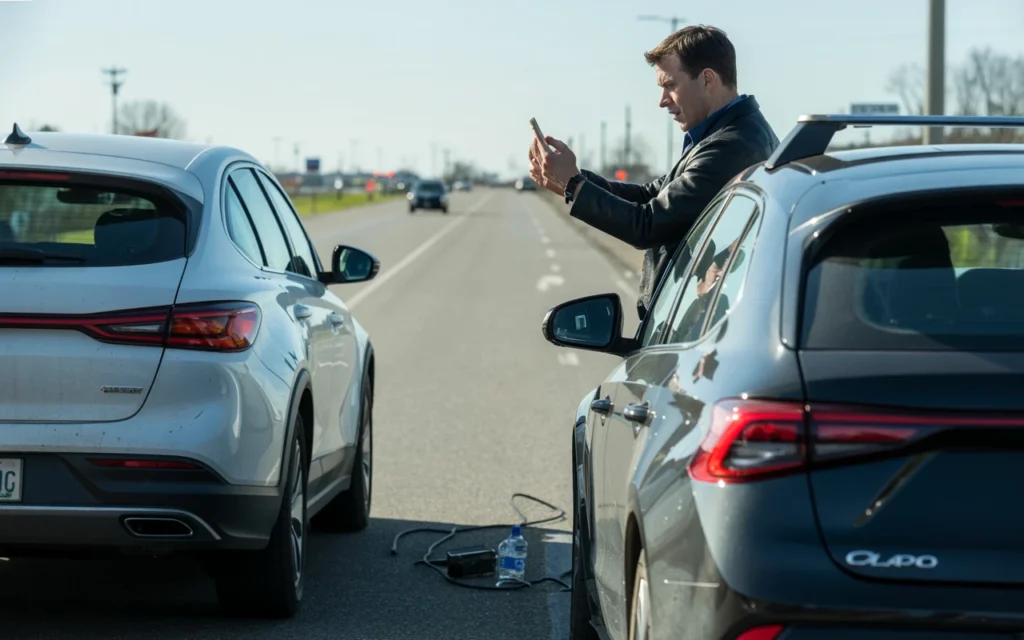
Right after a crash, your brain tries to do ten things at once. You want to stay safe, you want to do the “right” thing legally, and you want to stop the situation from getting worse. That mix of fear, adrenaline, and confusion is normal, even if you’ve been driving for decades.
Ontario adds another layer. You’re dealing with a no-fault structure for accident benefits, strict paperwork timelines, and reporting rules that can trip you up when you’re already shaken.
If you’re in Mississauga and you’re already thinking about whether you need a Car Accident Lawyer Mississauga, start here first and follow this checklist step-by-step.
This guide is built for one moment: the moment you’re trying to make smart choices while your hands are still trembling.
You’ll walk away knowing:
- what to do immediately after car accident in the first minutes, without guessing
- how to document the scene in a way that holds up later
- when you must report, and where (police vs Collision Reporting Centre)
- the key insurance and benefit deadlines in the first week
- what mistakes quietly damage claims
- when you should bring a lawyer in, early, not late
If you found this page because you want a clean checklist you can follow, you’re in the right place. I’ll keep it practical, step-by-step, and focused on what protects you.
Just been in a crash? One wrong move with the insurer can hurt your entire claim.
Before you give a recorded statement or sign anything, speak with our Mississauga accident lawyers — it’s free.
What Should You Do in the First 10 Minutes After a Car Accident in Ontario?
If you were sitting across the table from me, I’d start by helping you slow your breathing and get safe before anything else.
In the first 10 minutes, your job is simple: check for injuries, call 911 if needed, get out of danger, and begin preserving what happened.
Do not argue, do not debate fault, and do not “solve it” at the roadside.
Safety first, then documentation.
Ontario regulators and safety guides say the same thing: stop, check injuries, move to safety if you can, and start recording details once you’re out of harm’s way.
How to Check for Injuries and Call Emergency Help
- Do a quick injury check on yourself and passengers: head, neck, back, chest, and any bleeding.
- Call 911 right away if anyone is injured, if you suspect concussion, or if there’s a risk of fire.
- If someone is hurt, keep them still unless there’s immediate danger (like a fire risk). Wait for help and follow instructions from emergency services.
Why You Must Activate Hazard Lights and Move to Safety
- Turn on hazard lights immediately.
- If it’s safe and your vehicle can move, pull to the shoulder or a safer spot out of traffic.
- Stay alert to live traffic before opening doors or stepping out.
- Once safe, start taking photos and notes.
A quick real-world moment: I’ve seen clients do everything “right” after a crash, except they stayed in a live lane for photos. It’s not worth it. Move to safety first, then document. Your safety is the foundation of everything that comes next.
Ontario has strict accident benefit deadlines. Missing them can cost you thousands.
SABS paperwork, reporting requirements, and insurer tactics — Maana Law handles all of it from day one.
How Do You Properly Exchange Information Without Admitting Fault?
You’re probably asking yourself what you can say, and what you should not say, when the other driver walks up to your window.
Exchange only the facts and the required details: identity, insurance, vehicle info, and witness contacts.
Keep your words neutral.
Save opinions, apologies, and explanations for later.
Fault in Ontario is often assessed using insurer fault rules, not roadside conversations. That’s why calm, factual exchange matters.
What to collect, every time
| Item to collect | Why it matters |
|---|---|
| Full name + phone | For insurer report and follow-up |
| Driver’s licence number | Identity verification |
| Licence plate number | Vehicle identification |
| Insurance company + policy number | Claims process |
| Vehicle make/model/colour | Matching reports and photos |
| Witness names + contacts | Independent confirmation |
| Photos of scene and damage | Preserves evidence |
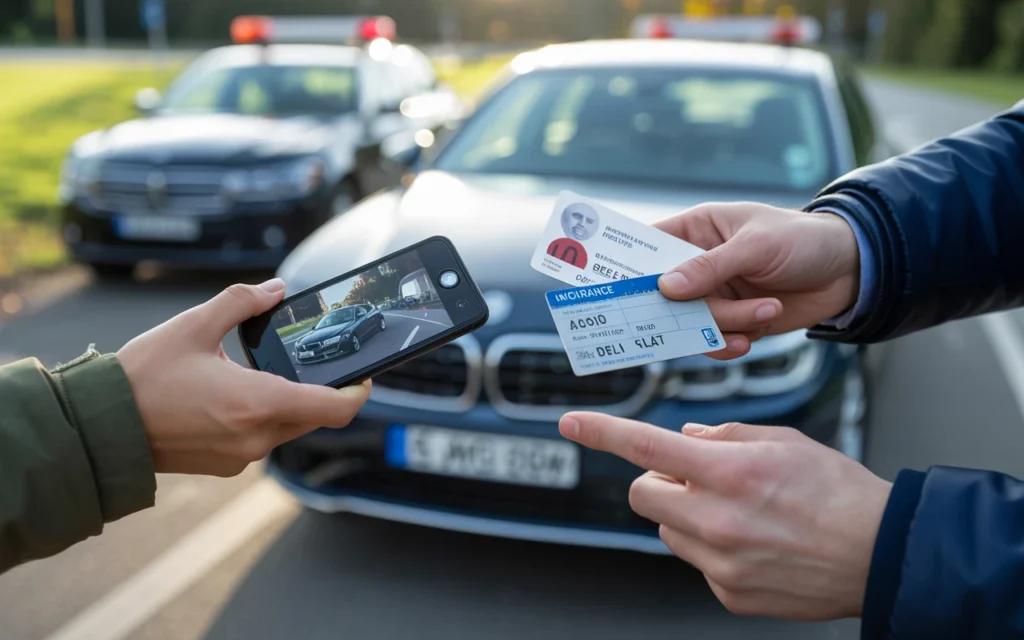
Take scene photos from multiple angles: wide shots showing positions, then close-ups of damage, skid marks, traffic signs, and the road surface.
A few sentences to avoid
- Skip “I’m sorry” and anything that sounds like blame.
- Skip guesses like “I didn’t see you,” or “I was only going a little fast.”
- If you need words: “Are you okay?” and “Let’s exchange information and report this.”
A client situation I often see: two drivers feel pressured to “be polite,” and one starts explaining what they think happened. Later, that casual explanation shows up in file notes. Keeping it factual at the scene prevents that.
When Must You Report the Accident – Police or Collision Reporting Centre?
At this point, it’s completely natural if you’re unsure whether you need to call police or go to a reporting centre.
If anyone is injured, report to police as soon as you can.
If there’s major damage, you still have reporting duties.
In many areas, you’ll be directed to a Collision Reporting Centre for non-emergency reports.
In Ontario, the Highway Traffic Act reporting duty is commonly explained this way: collisions involving injury, or combined damage above the reporting threshold, must be reported to police as soon as possible.
The $5,000 reporting threshold (what it means)
Ontario’s threshold for reportable property-damage-only collisions moved to $5,000 combined damage.
That matters because plenty of “looks minor” crashes end up over the threshold once repair estimates come in.
Police vs Collision Reporting Centre, quick comparison
| Situation | What to do |
|---|---|
| Injury or suspected injury | Call police / 911 |
| Damage appears over $5,000 combined | Report to police and you may be directed to a Collision Reporting Centre |
| Damage looks minor, no injuries | Contact your insurer, and follow local reporting instructions |
Many reporting centres expect you to come in quickly, and some guidance mentions a 24-hour target.
A pattern I’ve seen: a driver waits a couple of days because “it’s just a bumper.” Then headaches start, the damage estimate climbs, and now everything feels rushed. Reporting early keeps your options open.
What Deadlines Apply in the First Week for Insurance and Benefits?
Right now, you might be trying to relate this to your own situation and wondering, “How fast do I have to act?”
Notify your insurer right away, and aim for the first week even if you’re exhausted.
Accident benefits paperwork has strict timelines, and late filing can trigger denials.
Start the process early, then build the file calmly.
The Ontario accident benefits application package (OCF-1) states that you should notify your insurer within 7 days or as soon as possible, and return the application within 30 days after you receive it.
A simple timeline you can follow
| Timeframe | What you do | Why it matters |
|---|---|---|
| Day 0–1 | Notify insurer, ask for the accident benefits package | Starts the paper trail |
| By Day 7 | Give notice of intent to apply, or explain why you couldn’t | Protects eligibility |
| After you receive forms | Return OCF-1 within 30 days, or return with written reason for delay | Prevents delay-related denials |
Quick “time pressure” chart
- Scene to Day 1: Highest urgency (safety, photos, report)
- Days 2–7: Insurer notice and first medical documentation
- After forms arrive: Return OCF-1 within 30 days of receipt
- Up to 2 years: Lawsuit limitation concerns if a tort claim applies
Ontario’s accident benefits system sits inside the Statutory Accident Benefits Schedule (SABS).
That’s where benefits like income replacement, medical and rehabilitation, and attendant care show up for many injured people.
A situation I’ve handled more than once: someone was in pain and thought “paperwork can wait.” Then they missed the return window on the first package. Fixing that later is far harder than starting early. Fixing that later is far harder than starting early. If you are struggling with forms, knowing when to hire car lawyer can save your claim.
What Common Mistakes After a Car Accident Can Hurt Your Claim?
If this feels confusing at first, let me simplify it for you: most claim problems come from a handful of repeat mistakes.
Three mistakes cause the most damage: talking about fault, giving recorded statements too early, and weak documentation.
You can avoid all three with calm, consistent habits.
Think like you’re building a file, not winning an argument.
Good vs bad, side-by-side
| Choice that helps you | Choice that harms you |
|---|---|
| Stick to facts and exchange info | Admit blame or speculate |
| Get medical notes early | “Wait and see” with no record |
| Keep photos and a symptom log | Rely on memory weeks later |
| Ask for advice before recorded statements | Give a detailed statement while still shaken |
Why You Should Never Admit Fault or Apologize
Ontario insurers determine fault using Fault Determination Rules under the Insurance Act framework.
Your roadside words can get copied into reports, adjuster notes, or forms. Keeping your language neutral protects you.
The Danger of Giving a Recorded Statement Too Soon
A recorded statement feels routine, but it can lock you into details you later realize were wrong. After a crash, your timeline can be distorted by shock, pain, or delayed symptoms. If you speak, keep it short and factual.
Skipping Proper Documentation
Regulators encourage recording details and using an accident worksheet.
Photos, witness contacts, and medical notes become your proof when memories fade.
One real case pattern: someone felt “fine,” declined care, and didn’t keep a symptom log. By day 4, neck pain and dizziness showed up, but there was no early record. That gap becomes the insurer’s favourite argument.
How Can You Spot Delayed Injuries and When to Seek More Medical Care?
From my experience, this is where most clients want a clear answer because delayed symptoms can change everything.
If new symptoms show up in the first days, get checked and document it.
Do not assume “I’m okay” on day one means you’re okay on day five.
Medical records often become the backbone of your benefits and claim.
Delayed symptoms are common in soft tissue injuries, concussion-type impacts, and back and shoulder injuries. Track what you feel, when it starts, and how it affects sleep, work, and daily movement.
A simple delayed-symptom checklist
- Headache, dizziness, nausea
- Neck stiffness, reduced range of motion
- Back pain that worsens overnight
- Tingling, numbness, weakness
- Light sensitivity, brain fog, mood swings
- Sleep disruption
Ontario’s Minor Injury Guideline (MIG) is often discussed as a cap around $3,500 for medical and rehabilitation benefits for injuries treated as “minor.”
That’s one reason early medical clarity matters. If your condition is not minor, your file should show that clearly. Understanding how much car accident settlement you can recover helps you prioritize your recovery.
A client moment that sticks with me: someone felt shaken but “okay” after a rear-end hit, then woke up on day three with sharp neck pain and headaches. Once they got assessed and documented symptoms properly, the path forward became much clearer.
What Warning Signs Mean You Should Hire a Car Accident Lawyer Right Away?
Before you decide anything, you deserve a straight answer: some situations get worse fast if you wait.
If your insurer delays, disputes fault, pushes you into quick statements, or treats your injuries as “minor” when they are not, talk to a lawyer early.
If benefits are denied, reduced, or cut off, get help quickly.
If the two-year limitation clock is on your mind, do not leave that to the last minute.
Ontario accident benefits disputes can end up at the Licence Appeal Tribunal (LAT-AABS) if entitlement or amounts are contested.
That’s not where you want to arrive with a thin file.
Insurance Company Delays or Low Offers
Delay tactics show up as repeated requests for the same documents, vague reasons for “review,” or long gaps between responses. If you’re seeing that, it’s a sign to protect your file early.
Injuries More Serious Than “Minor”
If your injuries affect your ability to work, care for yourself, or function day-to-day, you may be outside what insurers try to label as a minor file. The MIG cap is one reason insurers argue “minor” early.
Disputes Over Fault or Benefits
Fault is often assessed using the Fault Determination Rules.
If the insurer’s fault position feels wrong, or benefits are denied, the earlier you act, the more control you keep.
If you want a calm, plain-language review of what’s happening in your file, you can speak with Maana Law in Mississauga, ON. We can tell you what the red flags mean, what deadlines you face, and what to do next, without upfront legal fees in many cases.
A quick real-world example: I’ve worked with people who waited until benefits were cut off to ask for help. The same files, handled earlier, usually have cleaner documentation and fewer avoidable fights.
Why Mississauga Accident Victims Trust Maana Law for Personal Injury Claims
If you’re feeling unsure about who to trust, I want you to know what you should look for in a real injury law practice.
You want clarity, steady communication, and a process that respects your health and your time.
You want someone who will build the evidence properly, then deal with the insurer pressure.
You also want access, because getting to an office is not always easy after a crash.
Maana Law is based in Mississauga, and the firm’s founder, Aman Kalra, has spent more than a decade helping clients across Mississauga and the Greater Toronto Area after serious injuries.
The firm also notes options like virtual meetings and home or hospital visits, which matters when travel is painful or risky.
FAQ
What to do after a car accident in Ontario?
Get to a safe spot, turn on hazard lights, check injuries, call 911 if anyone is hurt. Take photos, exchange names, licence, insurance, plate details, collect witness contacts. Report if required, then notify your insurer fast.
What do they check after a car accident?
They check your report details, photos, vehicle damage, witness info, and medical notes. Insurers also compare timelines, statements, and repair estimates for consistency.
Do I need to report a minor car accident in Ontario?
If there’s injury, report it. If it’s property damage only, reporting often depends on the $5,000 combined damage threshold and local reporting direction. Notify your insurer either way.
What is the protocol after a car accident?
Safety first, document the scene, exchange information, report if required, then notify your insurer and start accident benefits paperwork if you’re injured.
What is considered a minor incident?
People call it “minor” when damage looks small or symptoms feel mild. Insurers may treat some injuries under the Minor Injury Guideline, which limits medical and rehab funding in certain cases. If symptoms grow, get checked and document it.
What not to say after a car accident?
Don’t admit fault. Don’t apologize in a way that sounds like blame. Don’t guess speeds or causes. Keep it factual and focus on safety, info exchange, and reporting.
When should I contact a car accident lawyer after an Ontario collision?
Call early if injuries are serious, symptoms worsen after a few days, fault is disputed, benefits are denied or delayed, or you’re pushed into recorded statements while still shaken. Keep the two-year limitation period in mind.
Still shaken from a crash? Let us take the legal burden off your shoulders — starting today.
Free consultation. No win, no fee. We can meet in person, virtually, or visit you at home or hospital.
Closing Thoughts
A crash can make everything feel urgent at once, but you do not need to do everything perfectly to protect yourself. Start with safety, then take clear photos, exchange the required information, and report the collision the right way for your situation. After that, notify your insurer quickly and keep copies of everything you submit or receive. Over the next few days, pay attention to delayed symptoms and get checked if anything changes, because early medical notes often matter later. If you run into delays, denials, pressure for recorded statements, or confusion about deadlines, get help sooner rather than later. Contact Maana Law in Mississauga, ON at https://maanalaw.com/, call 437-979-4878, or email info@maanalaw.com for a consultation.