Legal Steps to Take Following a Car Accident in Ontario
Legal Steps to Take Following a Car Accident in Ontario Being involved in a car accident can be a daunting experience, but knowing the legal

I am Aman Kalra, an orthopedic injury lawyer in Mississauga. A fracture from a crash. A torn ACL from a fall on ice. A shoulder that will not heal months later. Orthopedic injuries change daily life, and insurers may argue the bone has healed so you have recovered. I help injured people across Mississauga, Peel Region and the GTA who face lasting pain, lost income and disputed benefits. I handle fractures, torn ligaments, hip and joint injuries, accident benefits claims and tort lawsuits on a contingency fee basis. You pay no legal fees upfront.
How can we help
After a fracture, torn ligament or joint injury, you face two tasks: healing and dealing with insurance. In 2022, Ontario police reported 36,740 people injured in collisions, including 745 on Mississauga roads. A fracture is not on the Minor Injury Guideline list, but insurers may still call a ligament or joint injury a sprain and cap your treatment at $3,500. I review your claim for broken bones, torn ligaments, and shoulder, knee and hip injuries, and I explain what the medical evidence needs to show.

I check which benefits apply to you after the July 1, 2026 changes, review your treatment plans and challenge a minor injury label when the medical evidence supports it. I explain how accident benefits, income loss and pain and suffering fit together, so you know what each part of your claim can and cannot cover.

You deal with me directly. I help with your accident benefits application, insurer requests and your tort claim, from the first OCF form to a settlement or hearing. I explain each step in plain language, and I take calls in English and Hindi so your family can follow along.
Our Services
The first 7 days shape the strength of your claim. What you document, who you contact and when you file directly affect your benefits and your compensation.
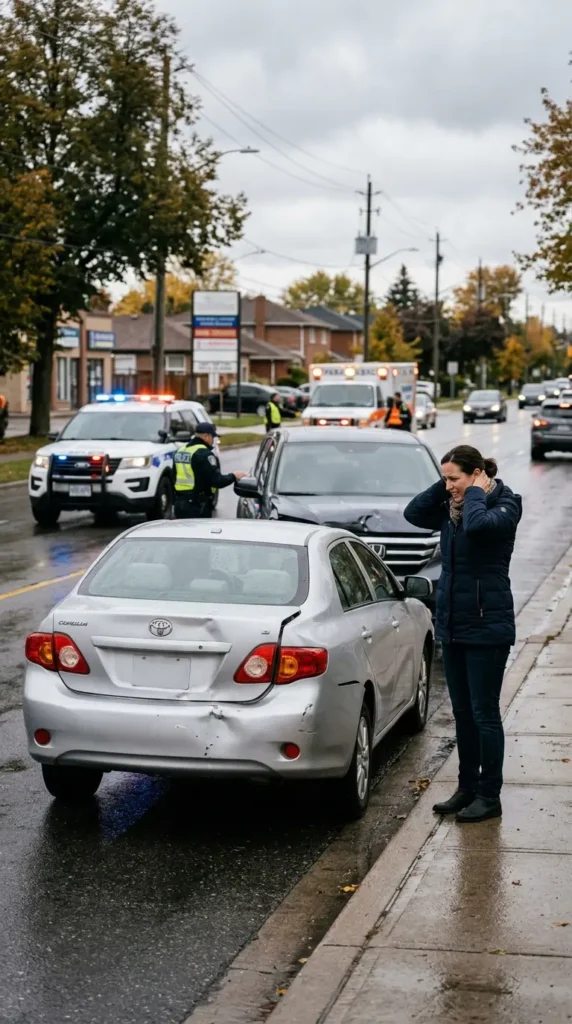
Go to the nearest emergency department within 24 hours, even if the pain seems manageable. Fractures and ligament tears can be missed at first, and pain often grows over the next days. Follow every treatment instruction and tell your doctor about every symptom. These records connect your injury to the accident.
Call police if they did not attend and ask for the report number. You must tell your own insurer you plan to claim accident benefits within seven days, or as soon as practicable after that. Ontario’s no-fault system applies regardless of who caused the crash.
Your insurer sends the OCF-1 application package. You generally have 30 days from receiving the forms to submit it, and a late application can be barred without a good reason. Call Maana Law at 437-979-4878 before the deadline so nothing is missed.
For an injury caused by snow or ice on private property, written notice is required within 60 days. For a fall on a public sidewalk or road, notice generally must go to the municipality within 10 days. A late notice can end a claim, so call me the same day.
The other driver’s insurer may call you early and ask for a recorded statement. Do not give one or sign a release before speaking with a lawyer. Statements can be used against your claim. I handle insurer communication for you.
An orthopedic injury damages your bones, joints, ligaments, tendons, cartilage or muscles. In Ontario’s 2022 road safety report, lower limb fractures accounted for 1,135 of 5,282 collision-injury hospital admissions.
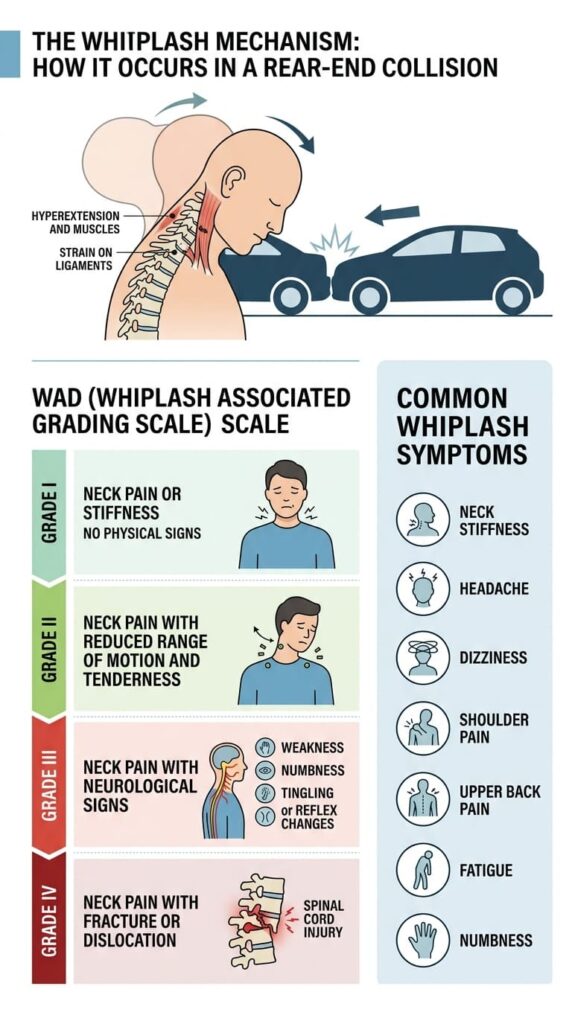
Ontario insurers use the Quebec Task Force WAD grading system. Your grade determines your MIG status and treatment budget.
Doctors describe orthopedic injuries by type and severity. Your diagnosis affects your benefits and the evidence you need.
| Injury Type | Common Signs | Claim Note |
|---|---|---|
| Fracture | Severe pain, swelling, bruising, trouble bearing weight | Not on the MIG list |
| Ligament Tear (ACL, PCL, meniscus) | Knee gives way, swelling, locking | Insurer may call it a sprain |
| Shoulder Injury (dislocation, rotator cuff) | Pain lifting, weakness, poor sleep | Needs imaging and specialist records |
| Hip or Pelvis Fracture | Groin pain, cannot stand or walk | Often needs surgery; mobility drives the claim |
Sharp or deep pain, swelling, bruising, a visible change in shape, a joint that gives way or locks, numbness or tingling, weakness, and trouble standing, walking, lifting or sleeping. Across Canada in 2016 to 2017, adults aged 18 to 64 were most likely to be hospitalized with a lower leg or ankle fracture after a fall, and seniors with a hip fracture. Pain that limits work or sleep needs a doctor’s visit.
Doctors start with a physical exam and an X-ray, which shows most fractures. CT scans show complex breaks and joint damage. MRI shows ligament, tendon and cartilage tears that X-rays can miss. A normal X-ray does not always mean no injury. Keep every imaging report and specialist note, because insurers rely on them.

How We Work
Yes. Adrenaline and shock can hide pain at the scene. Some injuries, such as hairline fractures and ligament tears, may not be clear until days later, and pain can grow.

Pain, swelling and bruising usually start right away. Most people go to emergency for X-rays, a cast or a splint. Get checked even if you feel fine, and tell the doctor about every area that hurts.

Swelling, joint instability, numbness or weakness may grow. A follow-up scan can find a missed tear or hairline fracture. See your doctor again if symptoms change, and keep the notes.

Surgery, physiotherapy and time off work often begin. Insurers review treatment plans and may dispute them. Keep records of what you cannot do at home and at work.

Tell your insurer within 7 days and return your forms within 30 days. A lawsuit is generally due within two years of the collision under the Limitations Act, 2002. Your medical records are your key evidence, so see a doctor as soon as symptoms appear.

ACL, PCL and meniscus tears often follow a hard impact or a twisting fall. Surgery and months of physiotherapy are common. Claims look at stairs, kneeling, long shifts on your feet and the risk of arthritis or more surgery later. Insurers may call a tear a sprain, so imaging, specialist reports and a clear record of your limits matter.

Dislocations and rotator cuff tears can limit lifting, driving, sleep and overhead work. Recovery can take months, and some people cannot return to physical jobs. I document your symptoms, treatment and work limits from the first visit so the insurer sees how the injury affects your daily life.

A hip fracture often means surgery, a hospital stay and a long recovery. Across Canada in 2016 to 2017, hip fracture was the most common injury behind fall-related hospital stays, with almost 32,000 stays. Mobility, independence and help at home are part of the claim. Pelvis fractures from high-impact crashes can bring similar long-term effects.

A dislocated joint can tear nearby ligaments and cartilage. Nerve damage can cause numbness, weakness or burning pain. Cartilage damage can lead to arthritis and more surgery. If pain lasts after the bone heals, it may become a chronic pain claim.
Ontario’s no-fault system means your own insurer pays your accident benefits, no matter who caused the crash. You may also have a tort claim against the at-fault person. Both can apply to orthopedic injuries.
Since July 1, 2026, standard medical, rehabilitation and attendant care benefits stay in all auto policies, while income replacement, caregiver, housekeeping and other benefits became optional. The optional benefits are offered on policies entered into or renewed on or after that date. Limits are $3,500 under the Minor Injury Guideline, $65,000 combined for non-catastrophic impairments and $1 million for catastrophic impairments, and insurers now pay first, ahead of workplace plans. Optional benefits cover only the named insured, spouse, dependants and listed drivers, so pedestrians and cyclists outside those groups keep only the mandatory benefits.
Accident benefits do not pay for pain and suffering. A tort claim against the at-fault driver can, but your injury must meet a legal threshold under s. 267.5(5) of the Insurance Act. In 2026, a deductible of $47,913.01 applies, and it reduces awards below $159,708.71, while awards at or above that amount are not reduced. A tort claim can also recover lost income, loss of earning capacity and future care costs. The deadline is generally two years from the collision.
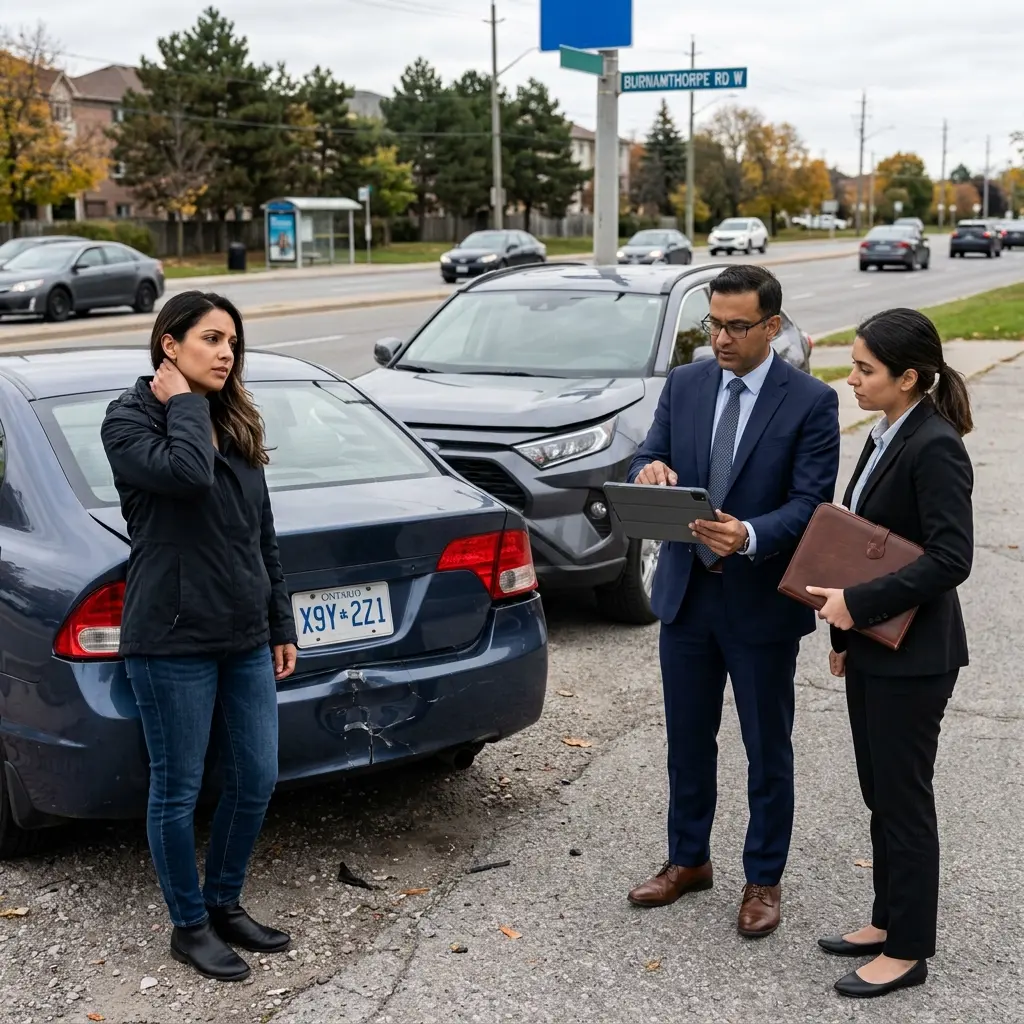
Fault is built from police reports, witness statements, photos and video. If you share some of the fault, your damages may be reduced by your share, but your accident benefits do not depend on fault. Even with partial fault, you may still have a claim. I review the evidence to challenge unfair fault assignments.
The guideline covers a sprain, strain, whiplash-associated disorder, contusion, abrasion, laceration or subluxation, plus related symptoms, and caps medical and rehabilitation benefits at $3,500. A fracture is not on that list. Insurers can still call a ligament or joint injury a sprain, so the label needs checking. A small cap can run out quickly.
| Injury Classification | Treatment Limit | Orthopedic Examples |
|---|---|---|
| Minor Injury (MIG) | $3,500 | Sprains, strains, contusions |
| Non-Catastrophic | $65,000 | Fractures, torn ligaments, most orthopedic injuries |
| Catastrophic | $1,000,000 | Amputation, severe loss of mobility, 55% whole person impairment |
Pre-existing conditions: A documented pre-existing condition that stops you from reaching maximum recovery within the cap can take you out of the minor injury group.
Functional limits: The injury stops you from working, caring for family or doing household tasks.
Chronic pain: Pain or limits that continue past the expected healing period.
Treatment beyond $3,500: Your doctor recommends surgery, therapy or imaging the cap would not cover.
Moving out of the guideline can raise your treatment limit from $3,500 to $65,000. In a September 18, 2026 decision, the Licence Appeal Tribunal dismissed a driver's request for about $13,000 in treatment because he gave no medical proof that his injuries were more than minor. Consistent medical records are what these disputes turn on. I build that evidence from day one.

Sudden impact can break bones and tear ligaments. Ontario had 26,967 personal injury collisions in 2022. On city streets and regional roads in Mississauga from 2015 to 2023, about two in three fatal and injury collisions (67%) happened at intersections. Turning vehicles, missed signals and crashes on the 401, 403 and QEW can cause fractures to the legs, arms, hips and shoulders. Motorcycle riders often suffer multiple fractures. I build fault from police reports, witness statements and video

People on foot and on bikes have no protection from a vehicle. In 2022, 3,305 pedestrians and 1,616 cyclists were injured in Ontario collisions. Common injuries include broken legs, hip and pelvis fractures, wrist and collarbone fractures, and knee ligament tears. Pedestrians and cyclists outside a policy's covered group may now lose optional accident benefits, so reviewing coverage early matters. Video from nearby cameras can disappear fast, so act early.

Ice, wet floors and stairs cause many fractures. Across Canada in 2016 to 2017, falls caused 152,504 hospital stays, averaging 14.3 days against 7.5 for all hospital stays. Property owners must keep their premises reasonably safe under the Occupiers' Liability Act, and municipalities can be responsible for sidewalks and roads. Notice deadlines are short: 60 days for snow or ice on private property and generally 10 days on public property.

A faulty product can fail and cause serious injury, such as a broken bike part, a collapsing ladder or a defective mobility aid. Product liability claims can involve the manufacturer, the importer or the seller. These cases are fact heavy and may need engineering evidence. Keep the product and its packaging and take photos before anything is thrown out or repaired.
Treatment depends on the injury and its severity. Knowing your options helps when an insurer disputes a treatment plan or applies the $3,500 cap, so you can get the care you need.
Many fractures heal with a cast, splint or brace. Your doctor sets the follow-up schedule, usually with repeat X-rays. Follow it and keep every record, because gaps in care can be used to question your claim.
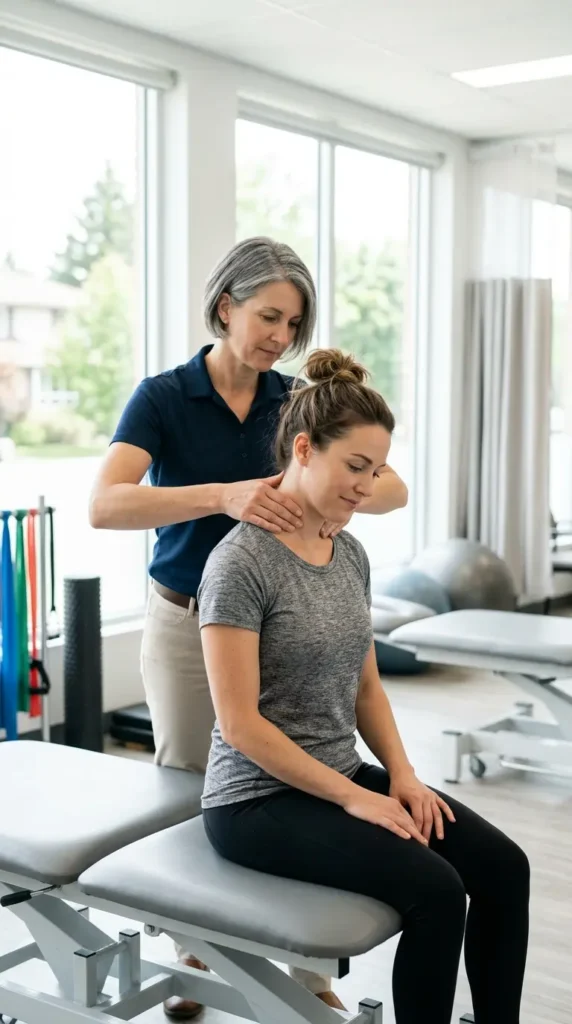
Rehab rebuilds strength, range of motion and the ability to work. Accident benefits may pay for approved treatment plans (OCF-18), up to your limit. Occupational therapy can help with return to work.
X-rays show most fractures. CT shows complex breaks. MRI shows ligament, tendon and cartilage damage. These reports are key evidence that an injury is not minor and that treatment is needed.
Medication, injections and pain clinic care can manage lasting pain after the bone heals. Records of ongoing pain, medication use and sleep problems support future care claims.
Plates, screws, rods, joint repair or replacement may be needed. Surgery can bring infection, delayed healing or a second operation, which affects work, rehab and future care costs.
Our Mississauga injury lawyers guide you step-by-step toward maximum compensation.

We review your medical records, imaging and accident reports. we check your deadlines, your policy and your MIG status, then plan a strategy specific to your injury and your work.

We gather treatment records, physiotherapy notes and specialist reports. When a case needs it, We seek expert opinions on how the injury affects work, mobility and daily life.

We respond to early low offers with documented evidence. we seek medical costs, lost income, future care and pain and suffering where they apply, and we explain each offer to you.

If a fair settlement is not offered, We represent you before the Licence Appeal Tribunal for benefit disputes and in the Ontario Superior Court of Justice for lawsuits. We prepare every file for a hearing.

You may pursue two tracks: accident benefits from your own insurer and a tort claim against the at-fault party. What applies depends on your accident date and coverage.
Physiotherapy, occupational therapy, rehab after surgery, assistive devices and imaging. The limit depends on classification: $3,500 (minor injury), $65,000 (non-catastrophic) or $1,000,000 (catastrophic). I review every treatment plan and challenge unfair denials.
Income replacement is optional on policies entered into or renewed on or after July 1, 2026. A tort claim can recover lost income and loss of earning capacity from the at-fault party. The deductible does not apply to income loss.
Requires a tort claim and meeting the legal threshold. In 2026, a $47,913.01 deductible reduces awards below $159,708.71. Lasting pain, physical limits and loss of enjoyment of life are all considered.
Long-term injuries can need surgery, therapy and equipment for years. A tort claim can include future care costs, and medical and rehabilitation experts can help estimate them. No deductible applies to future care.
If your injury stops you from home maintenance or caring for dependants, these benefits may be available through optional accident benefits coverage and through a tort claim. The deductible applies only to pain and suffering.
Often yes. Ontario uses comparative fault. Your tort award may be reduced by your share of fault, but accident benefits do not depend on fault.
Example: 25% at fault with $200,000 in damages could mean about $150,000 in recovery. This is an illustration, not a prediction.
Act fast. You generally have two years to sue, but accident benefit steps are much shorter.
| Deadline | Action Required |
|---|---|
| 7 days | Tell your auto insurer you plan to claim accident benefits, or as soon as you reasonably can after that |
| 30 days | Submit your OCF-1 (Application for Accident Benefits), counted from when you receive the forms |
| 2 years | Start a tort lawsuit (Limitations Act, 2002), or apply to the LAT within two years of an insurer’s denial |
| 10 or 60 days | Written notice after a fall: 10 days on public property, 60 days for snow or ice on private property |
In delayed-discovery cases or if the injured person was a minor, the clock may run differently. Call before you assume a deadline has passed.
Your Case, Our Priority
At Maana Law, we believe in providing personalized care and attention to each case. Meet the two passionate leaders of our firm, who are dedicated to securing the best outcomes for our clients:
Aman Kalra, the founder of Maana Law, has spent his career advocating for those affected by negligence and accidents. With his deep commitment to justice and exceptional legal expertise, Aman ensures that each client receives the compensation they deserve. Fluent in both Hindi and English, Aman connects effortlessly with clients from diverse backgrounds, making him a trusted advocate in Mississauga and beyond. His leadership and the team at Maana Law share his passion for excellence in personal injury law.
Gagan is the backbone of our firm’s day-to-day operations, ensuring that everything runs smoothly for our clients. As a law clerk and office administrator, Gagan is often the first point of contact for clients and ensures their needs are met with efficiency and care. A proud alumna of Osgoode Hall Law School, she is a licensing candidate with the Law Society of Ontario. Fluent in English, Hindi, and Punjabi, Gagan bridges language barriers, making sure all clients feel understood and supported in their legal journey.
EXCELLENT
Based on 25 reviews
Posted on Google![]()
Vidhi ChoksiTrustindex verifies that the original source of the review is Google.
I’ve had a good experience with Maana law and its employees. They were constantly in touch and helping regarding any updates that needed my attention. I would highly recommend their service.Posted on Google![]()
Jason RutherfordTrustindex verifies that the original source of the review is Google.
The team was amazing. Attention to details and great service. Truly worthy of the five stars.Posted on Google![]()
Eklavya KashyapTrustindex verifies that the original source of the review is Google.
I received a free consultation from Aman Kalra regarding a car accident, and I was very impressed with his professionalism and expertise. He took the time to clearly explain the process and answered all of my questions. He was very helpful and guiding me through the process.Posted on Google![]()
Supreet KaurTrustindex verifies that the original source of the review is Google.
Reached out to them for a car accident. Aman explained the process really well. Very knowledgeable and would highly recommend them for car accidents.Posted on Google![]()
Vicky SinghTrustindex verifies that the original source of the review is Google.
All staff very good and good services 👍🏻Posted on Google![]()
Sargam GargTrustindex verifies that the original source of the review is Google.
I had a free consultation regarding a motor vehicle accident with Aman Kalra and received a prompt response. Aman and his team explained the process clearly and thoroughly. I would highly recommend them for serious injury matters.Posted on Google![]()
Karan KulasingamTrustindex verifies that the original source of the review is Google.
My car accident was from 2019 and nothing happened when the file was with the previous firm. As soon as we hired Maana Law our file started moving and we reached a conclusion within 6 months of hiring them. Thank you to Aman and his team. We definitely recommend them for you injury claim.Posted on Google![]()
Gagan GillTrustindex verifies that the original source of the review is Google.
Everyone at the law firm has been amazing! I could not have asked for such an amazing team of people to help me especially when being injured you feel like there is nothing or no one there to help and they were always there to help me and reassure!! (Car accident personal injury)Posted on Google![]()
rhea khairaTrustindex verifies that the original source of the review is Google.
Had a free consultation regarding a motor vehicle accident with Aman Kalra. Aman and his team explained the process really well. Would highly recommend them for serious injuries.
Common Questions
Generally two years from the accident date to sue. Accident benefits have earlier steps: 7 days to notify your insurer and 30 days to return your forms. Falls have shorter notice rules, as short as 10 days on public property. Call early so you do not miss one.
A fracture is not on the Minor Injury Guideline list. Insurers may still dispute how serious an injury is. Medical evidence decides it.
Not automatically. For policies entered into or renewed on or after July 1, 2026, it is an optional benefit. Existing policies keep their coverage until changed in writing. I check which coverage applied on your accident date.
Sometimes, but not usually. The test looks at things like amputation, loss of use and a combined 55% whole person impairment. A doctor’s assessment decides it, and insurers often dispute it.
It is $47,913.01. It applies when the award is below $159,708.71. The amounts change each January.

Legal Steps to Take Following a Car Accident in Ontario Being involved in a car accident can be a daunting experience, but knowing the legal

Car Accident Services in Ontario What You Need to Know Experiencing a car accident can be a stressful and overwhelming situation. In Ontario, understanding the

Understanding Your Rights After a Car Accident in Ontario Owning a vehicle in Ontario is not just about the freedom of driving; it comes with
Manna Law is located at 90 Matheson Blvd W Suite 101, Mississauga, ON L5R 3R3, Canada.
If you would like to visit our law office and are traveling by bus from downtown Mississauga, take the MiWay Bus to Square One Terminal. Then, walk west (around 5-7 minutes) to reach our office at 90 Matheson Blvd W. The approximate travel time is about 20-30 minutes.
If you are traveling by car from downtown Mississauga, head west on Dundas Street towards Hurontario Street. Turn right onto Hurontario Street, continue for a short distance, and our office will be on your left. The approximate travel time is about 5-10 minutes (depending on traffic).
We are available 24/7.
For additional questions, you can call us at +1 437-979-4878 or check our reviews on Google.
Talk to us?